Intelligence can be defined as “the global ability of an individual to think clearly and to function effectively in the environment“. By breaking down this definition, we can get a clearer understanding of exactly what intelligence is.
“Global” means that a person’s intelligence affects many areas of their life. For example, we think of smart people as people who are good at many things.
“Thinking clearly” means the ability to use both inductive reasoning/inductive logic (i.e., determining what theories may explain your data) and deductive reasoning/deductive logic (i.e., determining what else could be true based on what you already know) when forming conclusions, rather than doing so based on emotional responses.
The main feature of intelligence is the ability to use convergent thinking (i.e., putting different ideas or information together based on what they each have in common when trying to solve a problem), and this is something that can be tested for by using intelligence tests.
A person with intelligence is also able to interact with other people or things in their surrounding environment, thereby allowing them to “function effectively” within it. For example, to achieve a desired goal or outcome.
Types of Intelligence
In the 1930s, a researcher by the name of Louis Thurstone created a factor analysis of intelligence which allowed for sets of data to be analyzed for trends.
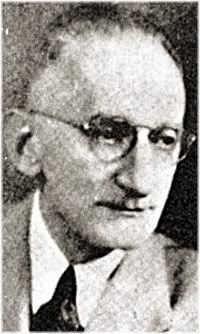
As a result of his research, Thurstone concluded that there are nine primary mental abilities as shown below:
• Inductive reasoning
• Deductive reasoning
• Word fluency
• Speed of perception
• Verbal comprehension
• Verbal fluency
• Memory
• Spatial visualization
• Mathematics
Expanding upon this view of intelligence is the psychologist Howard Gardner, who has proposed that we have multiple types of intelligences.

The eight intelligences proposed by Gardner are:
• Verbal/Linguistic
• Logical-Mathematical
• Bodily Kinesthetic
• Naturalistic
• Musical
• Visual/Spatial
• Interpersonal
• Intrapersonal
As you can see from the descriptions of intelligence so far, intelligence can be viewed in both a broad perspective (i.e., a general/global ability), or as a set of specific abilities, such as those proposed by Thurstone and Gardner.
What is Intelligence?
Despite the theories that we currently have, intelligence is still something which is hard to accurately define.
For example, consider the case where a person does poorly on their exams at school, but then later goes on to create a successful business.
According to their exam results, this person displayed a low-level of intelligence. However, they later demonstrated a high degree of intelligence by creating their own business.
So whilst an intelligence test may give us an idea of what a person is likely to be good at, we cannot say for certain how intelligent a person really is because different circumstances may have different effects on the type of intelligence that they display.

Another reason why we cannot completely define a person’s level of intelligence, is because intelligence has the status of a “hypothetical construct“.
This basically means that there are theories which help to explain intelligence, but we don’t know for sure exactly what intelligence is as it can vary depending on how you define it. Therefore, we can only make an educated guess based on the tests which we have used to measure it.
These tests of course, may or may not reveal a person’s true level of intelligence. As a result, we must always be open to the possibility that we have falsely labelled someone as being intelligent (i.e., a false positive/Type I error) or as lacking intelligence (i.e., a false negative/Type II error).
Well-Known Intelligence Tests
One of the first people to create an intelligence test was a scientist named Francis Galton. He used the “biometric method“, which attempted to test intelligence by using physiological measures such as the strength of a person’s grip.
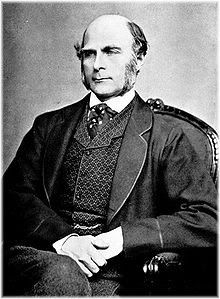
It was soon discovered however, that there was little correlation between how strong someone was and their academic performance. This subsequently led other researchers and investigators to come up with new ways of testing and measuring intelligence.
The Binet-Simon Scale
After Galton’s work, two French scientists named Alfred Binet and Theodore Simon devised a new way to measure intelligence called the “Binet-Simon Scale”.
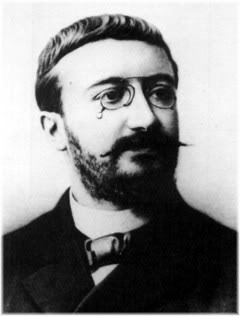
This test measured someone’s intelligence using the “performance method”, which involved testing intelligence based upon someone’s ability to give correct answers to a series of questions.
To help compare intelligences between different types of people, the Binet-Simon Scale used a measure called “mental age” (MA).
For example, if, on average, a group of nine-year olds score twenty correct questions, and then a child who is seven years old scored the same amount, then that seven-year old would be said to have a mental age of nine.
In general, mental age should rise as a person grows older. So the older they are, the better they will do on the test.
The Stanford-Binet Intelligence Scale
Today, we know the Binet-Simon Scale as the Stanford-Binet Intelligence Scale, because it was translated from French into English by the Stanford psychologist Lewis Terman.
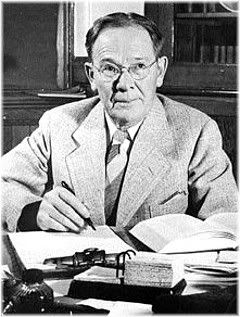
One of the things that Terman was interested in, was whether children who performed well on intelligence tests did better in life than children who did poorly on the tests. To measure this, he started a longitudinal study, which is a type of study that follows a group of individuals over a period of time.
After Terman’s death, his study was continued for around seventy years and the eventual results backed up what Terman had initially suspected. The study found that people with higher intelligence test scores were much more likely to be wealthier, happier and healthier than the people with lower test scores.
This result was hardly surprising however, as earlier we defined intelligence as the ability to “think clearly” and “function effectively”. Therefore, the higher a person’s level of intelligence is, the better they should do in society. It should be noted though, that this is not always true, and so we must be careful not to overgeneralize Terman’s results.
A savant for example, may be extremely gifted in one particular area such as mathematics, or have extraordinary abilities such as a perfect memory, but some savants struggle to tie their shoelace and some are unable to dress themselves without assistance. So being a genius doesn’t always guarantee that a person will be able to function effectively in society.

This suggests that there are in fact different types of intelligence, and so high performance in a single area may not necessarily translate into high performance in other areas.
The Wechsler Scales
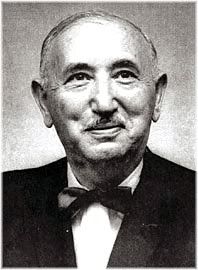
David Wechsler was a psychologist who created a series of intelligence tests known as the “Wechsler Scales”. These tests include:
• The Wechsler Preschool and Primary Scale of Intelligence
• The Wechsler Intelligence Scale For Children
• Wechsler Adult Intelligence Scale
One of the major advantages of the Wechsler Scales, is that unlike the Stanford-Binet test which only measured a person’s general level of intelligence, the Wechsler Scales measured different types of intelligence.
Note: The tests are called “scales” because the questions get progressively harder.
There are two types of intelligence measured by the Wechsler scale: “verbal intelligence” and “performance intelligence”. Both of these abilities contain a number of subtests, with seven subtests for verbal intelligence and six subtests for performance intelligence as shown below:
Verbal Intelligence
Information:
A person’s level of general knowledge.
Comprehension:
How well you can understand questions and grasp concepts.
Arithmetic:
A person’s mathematical abilities.
Similarities:
Measures abstract thought.
Digit Span:
Measures attention span.
Vocabulary:
How many word meanings you know.
Performance Intelligence
Digit Symbol:
Mental flexibility with random symbols.
Picture Completion:
Ability to notice differences between two similar pictures.
Block Design:
Mentally construct designs in your head.
Picture Arrangement:
Arrange pictures in a logical order.
Object Assembly:
Place the correct part in relation to a whole.
Once a person has completed all of the tests, they can then be given two separate intelligence quotient (IQ) scores: a verbal IQ score and a performance IQ score, with individual scores for each sub test within the verbal and performance categories.
Both of these scores (verbal + performance) can then be combined to give an overall or global IQ score.
Understanding IQ Scores
One of the problems in using mental age to measure intelligence, is that as a person’s chronological age (CA) increases, so does their mental age (MA). As a result, mental age is of little value in comparing scores between different groups of people, as one’s mental age is always rising and so is therefore unstable.
In an attempt to create a more useful and stable way of measuring intelligence, the German psychologist William Stern created a ratio based on the comparison of mental age and chronological age. He called this the “intelligence quotient” or “IQ”.
Note: It is called a “quotient” because the resulting score is created by division.
Calculating IQ score
To calculate a person’s IQ, Stern used the following formula:
IQ = (MA/CA) x 100
For example, if a child has a CA of 10, and a MA of 10, then we can calculate their IQ with the following calculation:
10 / 10 = 1
1 x 100 = 100
IQ = 100
A person with an IQ of 100 is said to possess an average level of intelligence.
Above average IQ
If another child is tested who has a CA of 8, and a MA of 10, then we can calculate their IQ with the following calculation:
10 / 8 = 1.25
1.25 x 100 = 125
IQ = 125
In this test, the child is said to have an above average IQ.
Below average IQ
If another child is tested who has a CA of 9, and a MA of 8, then we can calculate their IQ with the following calculation:
8 / 9 = 0.89
0.89 x 100 = 89
IQ = 89
A person who obtains this score would be said to have a below average level of intelligence.
Distribution of IQ scores
IQ is a random variable. This means that IQ test scores will vary in a population according to the laws of chance. The result of this, is that IQ scores taken from a random selection of individuals, will create a bell-shaped (aka Gaussian or Normal) curve.
At one end, you will have people with the lowest IQ scores. In the middle, the people with average IQ scores, and at the other end, people with the highest IQ scores.
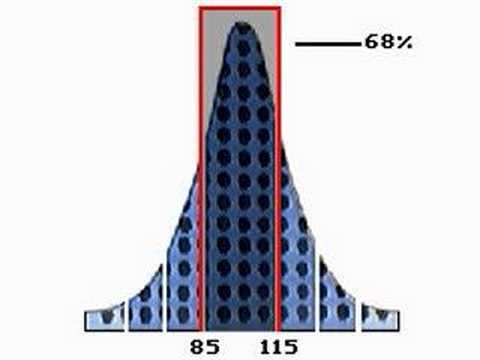
As you can see from the distribution of IQ scores, most scores are clustered in the middle and so most people have an average level of intelligence. Fewer people will have lower IQ scores, and fewer people will have higher IQ scores.
If we apply this to a population, we can generalize by saying that, on average, around 2% of the population will have an IQ lower than 69, 50% will have an average IQ (90-109) and 2% will have an IQ of 130 or above.
Validity & Reliability of Tests
In order for any test to produce meaningful results, it must be both valid and reliable.
Valid Test
A valid test is a test which measures what it’s supposed to measure. So a valid intelligence test would measure intelligence and not something else like your personality.
However, in order to determine the validity of a test, it is necessary to compare the scores obtained by that test with an outside criterion.

An outside criterion is a measurement that is independent of the test in question, such as the use of a grading marking scheme or a grade point average.
If an intelligence test is valid, then we would expect people with higher test scores to obtain higher grades, and people with lower test scores, to obtain lower grades.
The relationship between the test score and the outside criterion is determined by the “correlation coefficient”. This is a statistical measure of how closely two variables are related.
The higher the correlation coefficient the closer the relationship will be between test scores and grades, and so the more reliable the test could be said to be.
Reliable Test

A reliable test is a test that gives the same or similar results when that test is repeated by you or by others. If a test does not produce consistent results, then the reliability of that test can be called in to question.
Reliability can be affected by things such as the environment a test is taken in (e.g., distractions due to noise or light), how you feel when doing the test (e.g., tiredness or anxiety) and subjective measures of test performance (i.e., one marker may grade an essay differently to another marker).
Outcomes of Validity & Reliability
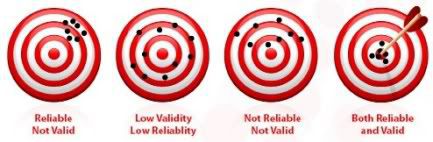
When measuring the validity and reliability of a test, we can come to four different conclusions as to the type of test it is:
1) Neither valid nor reliable
The test is not valid (i.e., it tests something it’s not supposed to) and the test is not reliable (i.e., it does not give repeatable results).
2) Valid but not reliable
The test tests what it’s supposed to test, but does not give repeatable results.
3) Reliable but not valid
The test gives repeatable results, but does not test what it’s supposed to test.
4) Valid and reliable
The test tests what it’s supposed to test, and also gives repeatable results.
Both the Stanford-Binet Intelligence Scale and the Wechsler Scales, are considered to be both valid and reliable tests of a person’s level of intelligence.
Nature Vs. Nurture
One of the biggest questions regarding intelligence, is whether it is due to heredity factors (i.e., genetics) or due to environmental factors (i.e., the things you are exposed to throughout your life). This is something which is commonly referred to as the “nature vs. nurture debate”.

Using these terms, “nature” refers to a person’s potential to reach to certain level of intelligence, and “nurture” refers to the effect that the environment has on developing or inhibiting that intelligence.
For example, suppose that two brothers are raised by the same parents, yet later in life, they each have two very different careers. One is a doctor, and the other is a car salesman.
Since both brothers were raised in the same family, we can say that they both had pretty much the same environmental exposure. As a result, the differences in intelligence between the two must be due to genetics (nature).

However, some would argue that the brothers did not have the same environment, as one child may have been given more love and attention than the other. This may then explain why one brother grew up to become more successful than the other.
This “birth-order” argument is one proposed by the psychologist Alfred Adler, who believed that the environment in which we are raised as children has a big influence on our intelligence and how we develop later in life. Therefore, according to Adler, nurture is the most important factor.
Feral & neglected children
Feral children are children who have been raised by animals with little or no human contact. Neglected children are similar to feral children, except that they were raised by humans but were brought up in a neglected or abusive environment.
A well-known example of a feral child is a boy named “Victor”, who was discovered in a French forest at age seven and subsequently studied by the physician Jean-Marc-Gaspard Itard.
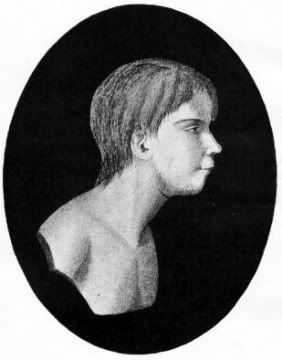
Despite Itard’s efforts to teach Victor, he never did achieve a normal level of intelligence. This is something that has occurred with most feral & neglected children that have been discovered, such as with the neglected child “Genie” as shown in the video below:
Note: Some neglected children, such as “Isabella”, may be able to develop language normally if they are discovered early enough.
In Isabella’s case for example, despite being brought up in a neglected environment, she was found at age six and within one year of being found was able to speak as well as her peers.

What we learn from feral children is that whilst we may all have the potential to achieve a certain level of intelligence, ultimately, it is the environment that we are exposed to which determines whether or not we realize our innate potential.
Feral children also teach us that our early years of childhood are extremely important in developing intelligence, and that if this intelligence is not given an opportunity to develop, then after a certain period of time (i.e., a critical period), it may be lost completely and never develop at all. This is exactly what was found with Victor and Genie.

This suggests that both nature and nurture are important in developing one’s intelligence. Nature may determine how intelligent we become; our potential intelligence. And nurture, will either allow us to reach our potential or inhibit it.
Current research tells us that children who are brought up in a stimulus rich environment (i.e., one in which they receive lots of love and mental stimulation), are more likely to develop higher levels of intelligence than children who are not brought up in such an environment. Feral children could be used as an extreme example of this.

Things which stimulate a child include: playing with them, talking to them, exposing them to music, new toys and exposing them to printed words.
Television exposure on the other hand, tends to have the opposite effect, as television has been shown to reduce one’s level of intelligence.
Interactions
An interaction is a mathematical concept used to describe variables which affect each other in a complex way. Interactive variables are variables which, when put together, result in more than the sum of their parts.
For example, 4 x 4 = 16
Additive variables are variables in which the whole is a result of the sum of its parts.
For example, 4 + 4 = 8
When we apply this type of interaction to intelligence, we can see that the relationship between nature and nurture results in something “new”. Something that is not in the original variables.
In other words, nature and nurture are interactive variables because they result in something which is more than the sum of their parts.

At present however, we don’t know when this interaction occurs, whether one variable is more important than the other, and when each variable becomes important for developing intelligence.
Studies on feral children suggest that the interaction occurs very early in life, and at least before the age of seven.
So using the mathematical concept of interaction, we can say that the nature vs. nurture debate is really a false argument as both are important in developing intelligence.
We can summarize this interaction using the following equation:
Heredity x Environment = Intelligence
or
Nature x Nurture = Intelligence
Note: The “x” is used to symbolize interactive variables whose relationship results in more than the sum of its parts.
Multiple Intelligence Theory
Earlier on, we briefly mentioned the psychologist Howard Gardner and his view that there are different types of intelligence. As a reminder, these are:
• Bodily-Kinesthetic
• Interpersonal
• Linguistic
• Logical-Mathematical
• Naturalistic
• Intrapersonal
• Spatial
• Musical
Gardner’s theory implies that just because a person didn’t do well on an exam, it doesn’t necessarily make them a “dumb” or “stupid” person. This is because there may be other things which that person is good at, but which were not tested for in their exam.

This “revelation” is what is known as “common sense psychology”, because once you start thinking about it, you soon realize that it makes logical sense and can easily be supported with evidence and examples of people displaying a high level of skill in one or more of Gardner’s categories.
Below we look at each of Gardner’s intelligence categories in more detail. It is important to note however, that although a person is likely to be intelligent in two or more categories, they will have an overall dominant intelligence in one particular category.
Bodily-Kinesthetic (physical activities)

People with bodily-kinesthetic intelligence tend to be especially good at doing activities which require high levels of bodily co-ordination, timing and balance. Such individuals therefore tend to excel at physical activities like sport or dancing.
Typically, people with bodily-kinesthetic intelligence prefer learning things by physically doing them rather than by reading or listening about them. This makes them very active and animated people.
Suitable jobs for bodily-kinesthetic people include:
- Athlete
- Explorer
- Dancer
- Actor
- Plumber
- Builder
- Surgeon
Interpersonal (people person)

People with interpersonal intelligence tend to be good at reading other people’s feelings and moods. As a result, they usually get along very well with people and could be described as having an extroverted personality type.
They feel comfortable in social situations, enjoy speaking in public and are usually recognized as being a “popular” person at school or at work.
Interpersonal people tend to learn best by discussing things with other people, asking other people questions or teaching something which they have learned to someone else.
Suitable jobs for interpersonal people include:
- Politician
- Manager
- Diplomat
- Social worker
- Teacher
- Sales person
Linguistic (good with words + language)

Linguistic intelligence means that a person is good with words, either in a spoken or written form. Typically, they are good at reading, writing, learning foreign languages and have good communication skills.
Linguistic individuals enjoy reading books for leisure, keeping a written diary, participating in online discussion forums, improving their spelling and learning new words to improve their vocabulary.
They learn best by reading about something and taking notes, and are also usually very good at explaining things clearly to other people.
They may, however, become easily distracted by distractions in their environment, and so usually appreciate a quiet place when they are trying to study.
Suitable jobs for linguistic people include:
- Politician
- Lawyer
- Writer
- Teacher
- Speaker
Logical-Mathematical (good at research)
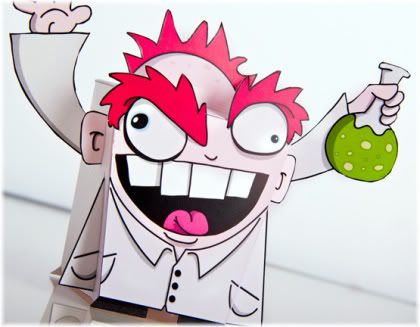
Logical-mathematical intelligence describes a person who is good at analyzing information, abstract reasoning and working with numbers.
They are also usually very good at investigating things and then drawing a conclusion based on the data that they have collected, such as when carrying out scientific research for example.
Logical-mathematical individuals enjoy doing crossword puzzles, playing brain training games, playing mental games such as Sudoku or chess, doing IQ tests and watching crime detective or mystery movies.
Such individuals learn best by having plenty of time to work something out on paper or in their head, as this allows them to consider all the different alternatives and solutions to a problem.
Using the traditional view of intelligence, if you have a high level of logical-mathematical intelligence, you will score very highly on IQ tests and formal academic tests. As a result, you will be classed as a very intelligent person.
Suitable jobs for logical-mathematical people include:
- Scientist
- Mathematician
- Detective
- Economist
- Doctor
Naturalistic (likes animals + nature )
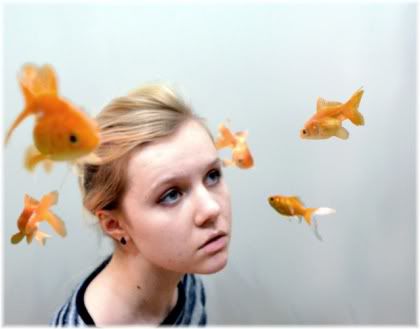
Naturalistic intelligence involves having a love of nature and the outdoors. Typically, such individuals love animals and will keep them as pets. They may also belong to an environmental or animal welfare group.
Naturalistic individuals also appreciate plant life and are likely to keep plants in their home, grow plants in their garden and buy organic food. Being spiritual is also not uncommon for such people.
How naturalistic individuals learn best can vary depending on their other dominant forms of intelligence, although, most will usually appreciate going outdoors to study if they are able to do so.
Suitable jobs naturalistic people include:
- Scientist
- Conservationist
- Farmer
- Naturalist
- Gardener
- Geography/ecology teacher
- Environmentalist
Intrapersonal (deep thinker)

Almost the complete opposite of interpersonal intelligence, intrapersonal individuals tend to be shy or feel uncomfortable in social situations, such as when speaking in front of other people or being in large groups, as this can make them feel overly self-conscious or lost.
Intrapersonal people tend to be deep thinkers, enjoy spending time alone, like to meditate and are usually very self-aware of who they are and their emotions. They also tend to be perfectionists, and so can at times be quite critical of themselves.
Intrapersonal individuals learn best in a quiet environment in which they are free from distractions, as they can be very easily disturbed by noise.
Suitable jobs for intrapersonal people include:
- Philosopher
- Psychologist
- Theologian
- Writer
Spatial (good at imagining things)

People with spatial intelligence are good at thinking about something in their head and then creating it in reality. They have good hand to eye co-ordination and are good at giving directions. People with this dominant form of intelligence are more often men than women.
Spatial individuals enjoy constructing models, drawing, playing with Lego, computer games or puzzles, and will learn best if they are able to imagine something vividly in their mind.
Suitable jobs for spatial people include:
- Builder
- Architect
- Pilot
- Artist
- Fashion designer
Musical (good at music)

Musical intelligence involves being good with music, rhythm, listening and pitch discrimination.
Typically, such people like to play a musical instrument and/or sing. They are also very fond of listening to music, and so tend to buy lots of music records, music CDs or download MP3s.
People with this type of intelligence learn best if they are able to make a rhyme, rap or song of whatever it is that they are trying to memorize.
Suitable jobs for those with musical intelligence include:
- Musician
- Singer
- Conductor
- Composer
- Radio host
- DJ
What’s Your Dominant Form of Intelligence?
After reading the list of Howard Gardner’s multiple intelligences, you may find that you fit into one or more categories. These categories are your dominant forms of intelligence, and are the things that you have a natural ability at.
The following video discusses how Gardner’s multiple forms of intelligence can be applied to learning in the classroom.

Final Thoughts
If before reading this article you did not consider yourself to be an “intelligent person”, then I hope that you are now starting to reconsider that false belief. We all have different forms of intelligence, and different people are “intelligent” at different things.
David Beckham for example, is someone who I consider to be an extremely intelligent person. If you had not read this article, you would have probably laughed at that statement.
But he is clearly very good at football (soccer), and so it’s obvious that his dominant form of intelligence is “bodily-kinesthetic” because he’s very good at playing a sport.

However, David is probably not a very good mathematician, but by focusing his efforts on his dominant form of intelligence, he was able to become very successful at doing something which he enjoyed and was naturally good at.
We can learn from examples such as David Beckham, by doing the things that we are naturally intelligent at. These will be the things that you most enjoy, and because you enjoy them, you will also have the drive, motivation and determination to keep pressing forward in the face of adversity.
As a result, you will be much more likely to succeed at doing something which you are intelligent at, than doing something which you are less intelligent at.
Reviewed – 11th March 2017