Thighplasty, also known as a thigh lift, is a surgical procedure that tightens the skin of the inner or outer thigh by removing excess skin. This may be carried out as a single procedure by itself, or combined with another body contouring procedure to obtain more noticeable results.
For example, liposuction can be used to remove fat deposits to produce more defined and shapely contours. Whilst a buttock lift, or a tummy tuck, can be carried out to enhance the appearance of the buttocks/abdomen to better compliment the newly shaped thighs.
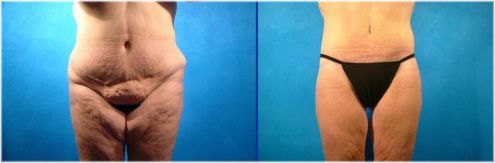
Thighplasty can be performed on both men and women who have sagging thighs. This may have occurred due to gravity, hormonal changes, loss of skin elasticity, excess weight, general aging, or a combination of these factors, which has left the patient feeling self-conscious and insecure with their looks.
Typically, however, most lower body contouring procedures are carried out on previously obese patients. Due to their size, the weight loss they experienced left them with large amounts of sagging skin which can only be effectively addressed via surgical means.
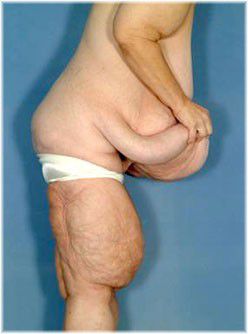
In the large majority of cases, thighplasty significantly improves the appearance and attractiveness of the thighs by reducing their size and improving definition and contours.
To get a rough idea of the type of result you could get from a thigh lift, pull the skin of your inner or outer thighs upwards towards the groin or chest. This will show you what your thighs will look like with tighter skin, but it won’t show you the scarring that will be left behind.
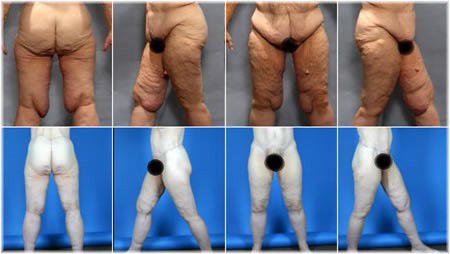
In general, you can expect to pay somewhere in the region of $4,000 to $12,000 for a thigh lift. This amount will include all your fees, such as your surgeon’s fees, fees relating to any medical tests you undergo, fees for drugs, medication and anesthesia, and the fee of the medical facility or hospital in which your procedure will be carried out.
Types of Thigh Lift Procedures
Due to the fact that a thigh lift is a major invasive procedure, it is carried out under general anesthesia. This means that you will be unconscious throughout the duration of the operation.
How long the procedure takes to complete can vary depending on what you are having done, although, in most cases, it will usually take around two to four hours.

In order to remove excess skin from the thighs, the plastic surgeon will need to make several incisions in the skin. The location of these incisions will largely depend upon how much skin there is to tighten, the type of technique your surgeon chooses to use, and the type of procedure that you are having done.
Below we look at two of the most common types of thigh lift surgery, and the type of results you can expect to get from each. Both procedures are also usually carried out with liposuction, as this allows for greater tightening and a better lifting effect.
To find out more about liposuction please see this page.
It is important to note, however, that a thigh lift does not produce permanent results. So you may need to undergo another procedure every 10-15 years in order to maintain your results.
1) Outer Thigh Lift
With a standard outer thigh lift, also called a lateral thigh lift, an incision is made along the inner groin crease in a v-shaped pattern where the v-shape of your underwear would normally meet the top of your leg.
This is then extended upwards over the side of the top of your outer thigh, and then around your back if you are also having a buttock lift. This has the advantage of avoiding scarring on the legs and allowing you to hide your scars by wearing underwear.
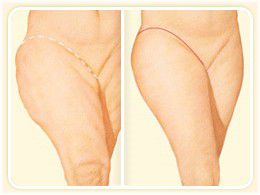
To carry out the procedure, the surgeon will lift the skin after making the incisions and cut away any excess skin that is causing sagging to occur on the thigh.
After a satisfactory amount of skin has been removed, the skin is lifted upwards and the incision is then closed.
Usually, adsorbable/dissolvable stitches will be used to close the uppermost surface region of the incision, as this minimizes the eventual scarring that you will get.

To get a rough idea as to what sort of result you can expect from an outer thigh lift, grab the top of your leg with both hands at the same angle the bottom of your underwear would lie along one side of your leg, and then pull upwards.
Target areas
The outer thigh lift targets excess loose skin on the outer regions of the thighs, such as due to weight loss and the effect of gravity on that skin. If a buttock lift is also performed, the skin on the buttocks shall be tightened in addition to the thighs.
If you squeeze and lift the skin on your outer thighs and note the change in appearance it makes, you can quickly make a determination as to how much benefit you would get from having an outer thigh lift done.
A lateral thigh lift can be carried out on its own or combined with a medial thigh lift, tummy tuck, body lift or liposuction.
2) Buttock Lift
A buttock lift is often carried out in conjunction with an outer thigh lift to firm the buttocks and improve the contours.

There are two ways the incisions for a buttock lift can be made. The first involves making an incision just above and along the top of your buttocks, and the second method involves making an incision along the buttock crease where your lower buttocks meet the top of your thighs.
Generally, most plastic surgeons use the first method as it’s easier to obtain more natural looking results with, and the eventual scar can be hidden quite easily with your underwear.
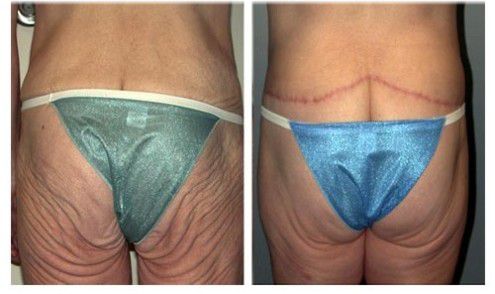
With a lower buttock incision, however, the resulting scars have a tendency to migrate over time as the skin sags. This then makes it more difficult to hide the scars with underwear or swimwear.
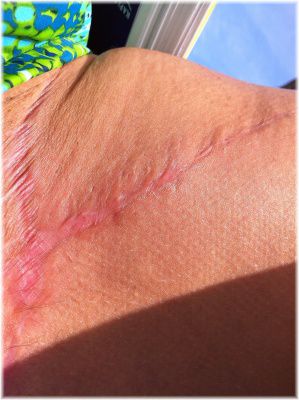
Scars can take up to one year before they fade from a reddish color to a whitish color, and even though they will fade, they will still be noticeable.
3) Inner Thigh Lift

An inner thigh lift, also called a medial thigh lift, can result in more scarring than an outer thigh lift and scars which cannot be as easily concealed.
To carry out the procedure, the surgeon will start by making an incision in the region where your inner thigh meets your pubic area along the inner groin crease, and then extending that incision backwards into the crease of the buttock if necessary.
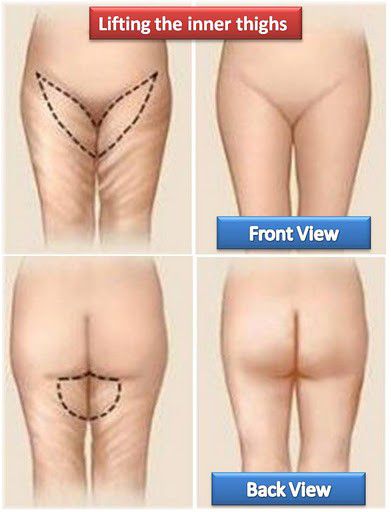
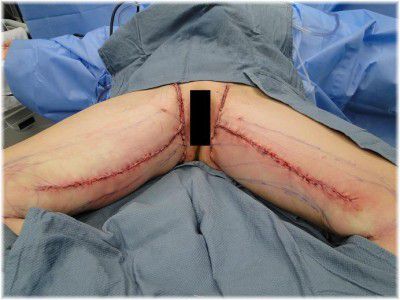
If you have a lot of sagging skin you may also require a vertical incision that runs down and along your inner thigh towards your knee.
This, however, will leave a very noticeable scar that is not easily concealed, and so this procedure is usually carried out only on individuals who have lost a large amount of weight and have a lot of excess sagging skin remaining as a result.
To get an idea as to the type of result that you can expect from an inner thigh lift, grab your upper inner thighs and pull upwards, or grab your middle inner thighs and pull inwards for a vertical incision.
Target areas
An inner thigh lift targets the inner area of your thigh to remove excess skin and tighten loose skin along the inside of your leg.
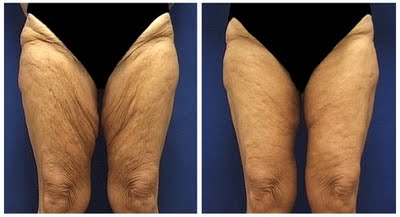
If you notice an improvement in the appearance of your inner legs when you pull the skin of your inner thighs, then you may benefit from having a medial/inner thigh lift done.
A medial thigh lift can be done on its own or combined with a lateral thigh lift, tummy tuck, liposuction or body lift.
4) Lower Body Lift
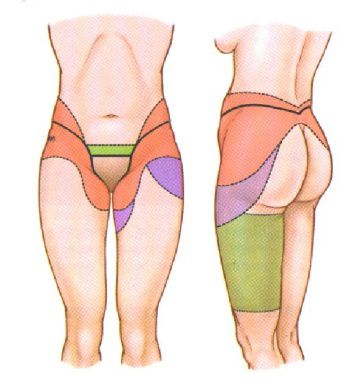
A lower body lift combines a thigh lift, buttock lift, hip lift and lower back lift. It is most suitable for those who have lost a lot of weight in a short period of time, and now have large amounts of sagging skin in the lower body region.
Tummy Tuck (Abdominoplasty)
A tummy tuck, also known as abdominoplasty, is a type of plastic surgery that removes excess sagging skin from the tummy. It can be done on its own, or combined with a thigh and buttock lift as part of a lower body lift.
Abdominoplasty is especially suitable for women who have given birth and now have stretch marks or creases around their abdomen, or for people who have lost a lot of weight and are now left with large amounts of sagging skin.
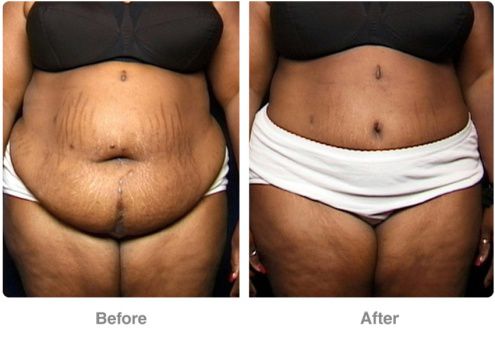
Depending on the amount of skin involved, there are a number of different techniques that a cosmetic plastic surgeon can use to perform the procedure.
In general, however, all types of abdominoplasty involve tightening the abdominal wall, removing excess skin and/or removing excess fat.
The end result is a reshaped abdomen which makes you look slimmer and with more defined body contours. But due to the invasive nature of this procedure, you will be left with a very visible scar.
How is a Tummy Tuck Done?
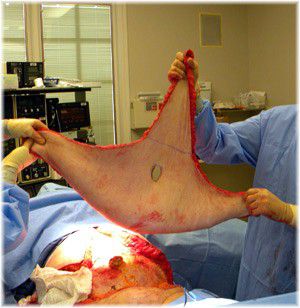
Although the exact steps that a surgeon will follow to perform abdominoplasty can vary from surgeon to surgeon, and indeed, from patient to patient, you can expect something similar to the steps listed below:
1) An incision is made around the edge of your belly button, with another incision running hip to hip across your pubic hairline.
2) The skin is separated from the abdominal muscles underneath.
3) The abdominal muscles are tightened with large sutures.
4) Excess skin is removed from the abdominal region.
5) A new opening is made for your belly button, after which, it is pulled through into place and then sutured.
6) Tubes are placed under the skin to remove any excess fluid and may remain there for up to a week. This is necessary for the healing process.
7) The abdominal incisions are closed.
Some variations of the standard tummy tuck are listed below:
1) Mini-Tummy Tuck
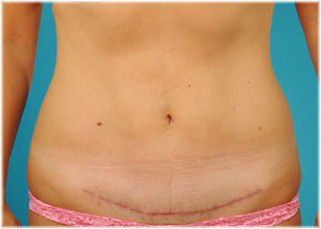
A mini-tummy tuck, or mini-abdominoplasty, is a less invasive version of the standard abdominoplasty procedure. It results in a shorter scar and does not require the belly button to be repositioned.
However, like standard abdominoplasty, scars will be visible but can be hidden under a bikini or panty line.
Mini-abdominoplasty is most suitable for those who have excess skin or bulging in the lower abdomen. As a result, this procedure tends to be popular with women who are looking to regain their old figure after giving birth.
2) Extended Abdominoplasty
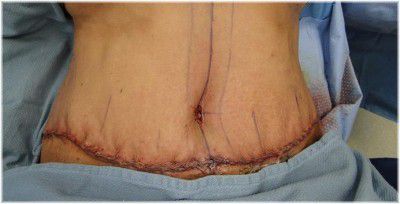
Extended abdominoplasty is very similar to standard abdominoplasty. The main difference is that the incision is extended slightly so as to remove excess skin and fat from the hips and lower back area.
Whilst extended abdominoplasty certainly can produce excellent results, due to the longer incisions which are made, there is less chance of the surgeon being able to hide the eventual scars. As a result, you may have visible scaring above your bikini line.
3) Belt Lipectomy
Belt lipectomy is basically a combination of standard abdominoplasty and a buttock lift. It is designed to remove excess skin and fat from the abdomen, hips, lower back and buttocks.
A belt lipectomy can produce dramatic results, but the resulting scar will wrap around the body which makes it more difficult to conceal.
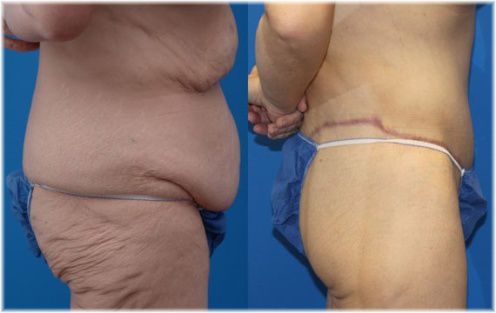
So whether or not you choose to have this procedure done, really depends on the trade-off you are willing to make between a slimmer mid-section and visible scarring. But if you don’t often wear bikinis, then the scarring may be less of a concern for you.
To give you an idea of the type of scarring you can expect from a belt lipectomy, imagine a scar line going around your waist like a belt but thinner.
Recovering From A Thigh Lift
The amount of time taken to recover from a thigh lift can vary depending on the extent of your procedure and if you had any other procedures done alongside it. But in most cases, you should be able to return back to your everyday activities in about 3 weeks, providing that those activities are not too strenuous.
The first few days of your recovery, however, will most likely be spent in bed and you can choose to spend this time either in a hospital or at home.
Your aim during this period should be to get as much rest as you can, and to each day increase the amount of activity you do as this will help to reduce swelling.
Any pain that you experience during this period should be quite effectively controlled with the pain medication your surgeon gives you.

In order to assist the healing process, reduce swelling and ensure that the skin heals in the correct position, you will be advised to wear a supportive undergarment, take your antibiotic medication and to clean your wounds regularly.
Most surgeons now use adsorbable stitches, so you won’t have to go and have your deeper sutures removed until two or three weeks after your surgery. If adsorbable stitches are not used, you will need to have those removed about a week after surgery and then your deeper sutures removed later.
The large majority of your healing will be done within the first month, however, it can take up to twelve months for you to fully heal and for all the swelling to go down completely.
If you experience any of the following symptoms during your recovery you should contact your doctor or surgeon as something may be wrong:
• High temperature/fever
• Excessive & prolonged bleeding
• Separation of wound edges
• Pus filled drainage
• Extreme and constant pain
Risks/Complications
Like any other form of cosmetic plastic surgery, there are certain risks associated with having a thigh lift operation done. Below are listed some of the most common risks that can occur:
Scarring
As you will be having an invasive form of cosmetic surgery, there will be some degree of scarring after you have healed from your procedure.
However, the extent of your scarring is very difficult to predict, as different people heal differently and produce different types of scars.
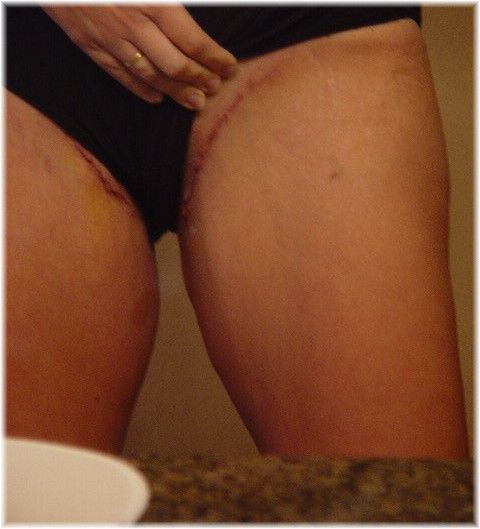
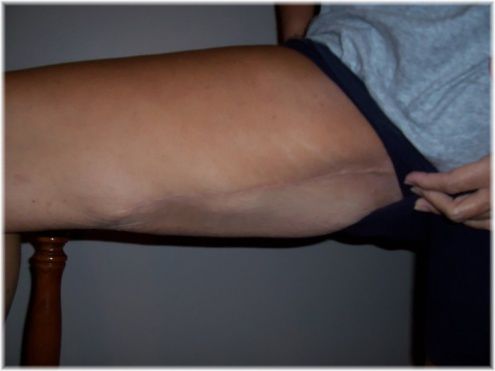
Some people, for example, may have very thin and lightly colored scars, whilst others may have scars that appear thicker and more darkly colored.

Although your surgeon will do their best to make their incisions in regions of the body where they can be easily concealed, your surgeon has little control over how the resulting scars will turn out and so this is something that you must be prepared for.
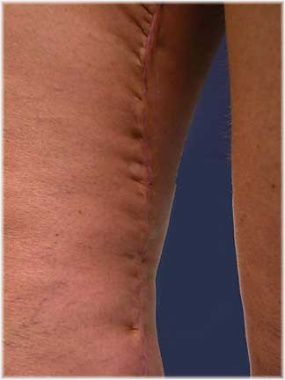
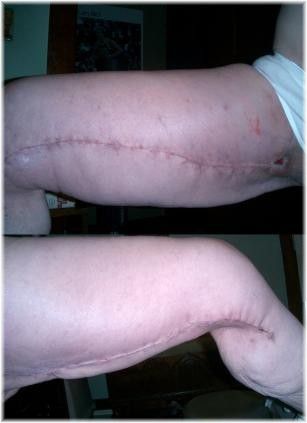
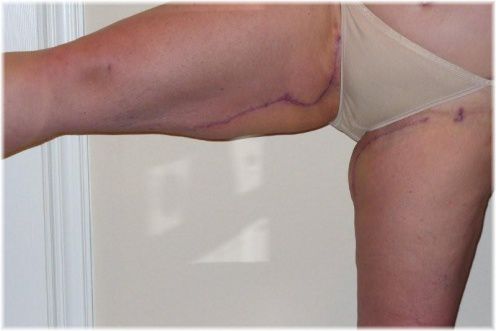
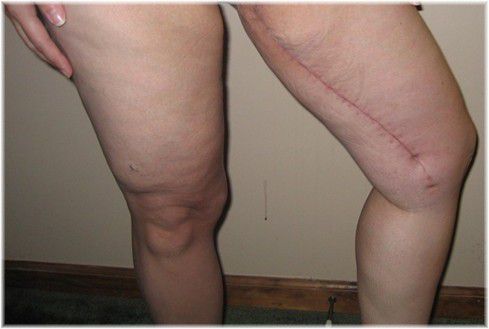
Furthermore, some types of incisions, such as a vertical scar incision, will leave a very long and noticeable scar along your inner thigh. So you also must be prepared to make the trade-off between having sagging skin or having reduced skin laxity but with scarred skin.
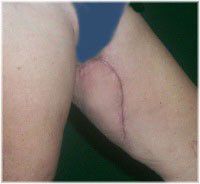
Some examples of thigh lift scars during different stages of the healing process are shown below:
Infection
Infection is a very serious risk with thigh lift surgery, and even though you will be given antibiotics to take during your recovery period, it is important to remember that antibiotics will not make you immune to infection but will only reduce your risk.
It is therefore vitally important that you cleanse and disinfect your wounds on a regular basis, and be especially carefull to keep your wounds clean after going to the bathroom where they may become contaminated with feces.
The good news is that most infections can be quite easily dealt with if caught early enough, but if left untreated, an infection could lead to the death of tissue in the treated area and possibly also poisoning of the blood by bacteria (septicemia).
Bleeding
Providing that you are not taking any blood thinning medication such as aspirin during your recovery period, the risk of bleeding is relatively low.
However, it still a possibility and severe bleeding could lead to a hematoma where the blood begins to pool underneath the skin and create pressure on the surrounding tissue. If this occurs, you will require immediate surgery to drain the blood and to stop the bleeding.
Deep Vein Thrombosis
The risk of deep vein thrombosis, or DVT, is another significant risk associated with most types of surgery, and there is an elevated risk with surgeries in which you will remain bedridden after your surgery for several days.
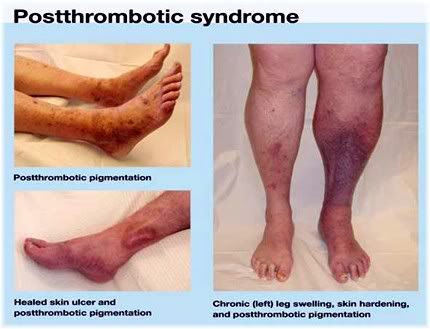
The risk of DVT can be minimized with heparin injections, anti-thrombotic stockings and movement.
If you have ever suffered from DVT before, or have a family history of DVT, then it is important that you make your surgeon aware of these facts because DVT can be fatal if it causes a pulmonary embolism as a result of a blood clot blocking a pulmonary artery.
Disappointment
No matter how much you think you are prepared for what might happen, sometimes, you will end up being disappointed with the results that you get.
You may, for example, not be entirely happy with the way that your scars have healed or where your scars were positioned, or, you might think that your thighs haven’t been lifted enough.
This is a risk that you must be prepared to take because there are no guarantees when it comes to cosmetic surgery outcomes.
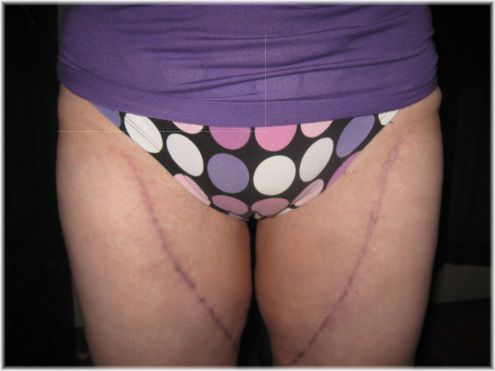
In addition, you must also be prepared for the possibility of getting a bad result. This could occur due to the surgeon making a mistake, some kind of complication occurring during your surgery or some post-surgical complication that affects your end result.
If you are very unhappy with the end result however, you will usually be given the option of having a revision thigh lift surgery done. Although this will mean extra cost and possibly additional scarring, so revision surgeries are always a last resort option.
Risks Of Surgery
Some of the other risks that may occur as a result of having plastic surgery include:
Skin Discoloration
Discoloration of the skin is a common occurrence after having surgery, and may be due to bruising or a temporary reduction in blood supply to a particular area. In most cases however, discolored skin will eventually fade back to normal over time.
Swelling
Swelling is quite common after an invasive form of surgery such as a thigh lift, buttock lift or abdominoplasty.
Most swelling will go down within the first week after your surgery, although depending on the exact procedure that you have had done, it could take a few months for your swelling to completely subside.
Numbness
Numbness may be experienced in areas of the body that have been operated on and/or surrounding areas. Numbness is usually short-lived, so in most cases, it should be gone within the first few days after your surgery.
Skin Loss
You may experience some amount of skin loss along any incision lines that have been made on your body. This can cause tension on the skin making it feel tight, which could last for several weeks until the skin is given time to stretch out and heal.
Skin Irregularities
Skin irregularities are any lumps or depressions that appear on your skin after surgery. They are most common after liposuction, although they can also occur with body contouring surgery.
The skin should return back to normal after a few months, but if the irregularities bother you, then a revision surgery may be required.
Asymmetry
If your body has been shaped by a surgeon to make it look different from how it used to be, then you may find that one half of your body looks slightly different to the other half.
This is called an asymmetry, and may require a second surgery to correct if it’s very noticeable and bothers you.
Chronic Swelling
Swelling after surgery is normal, and although some swelling can take 6-12 months to fully go down, eventually it will disappear on its own.
However, in some cases, chronic swelling develops where the swelling does not go down and is permanent.
Wound Separation
Whilst every effort is made to ensure that incisions are closed properly, occasionally wounds may open and will need to be re-sutured.
Wound separation is most likely to occur in people who have undergone weight loss surgery after experiencing massive weight loss.
Reviewed – 29th March 2016