It has been said that around 95% of your life is controlled by your subconscious mind. As a result, most of the things you do occur automatically and without you having to consciously think about them.
For example, when you first learned how to drive it took a lot of mental effort, concentration and focus in order to remember how, what and when to do things.
But once you had been driving for a while it became progressively easier, until eventually, you could drive your automobile without having to think about it. Almost as though you were running on automatic pilot!

This type of automatic behavior for well-practiced tasks is an extremely interesting phenomenon of the brain, because essentially, it means that anything you do on a regular basis (i.e., your habitual behaviors or habits) tend to occur unconsciously without you having to think about them.
This can be advantageous because it means that you are then free to devote your attention to other tasks, such as speaking on your cell phone while driving your car. However, doing things automatically isn’t always a good thing.
Subconscious bad habits
If around 95% of the things you do on a given day are done automatically and under subconscious control, this means that you are only consciously in control of around 5% of what you do in any given day.
The times when you are consciously in control, will be the times when you are exposed to something which you have not been exposed to before.

This is why people tend to feel very tired when they visit somewhere new, such as when going on vacation, as in a new environment the conscious brain must take the lead until routines are developed that allow the subconscious mind to regain control again.
Whilst automatic subconscious control of behavior certainly is a very useful thing, in some cases, it can actually work against you. The most obvious example of this would be the bad habits that people have.

Bad habits are self-destructive forms of behavior that occur automatically and can continue for years, if not a person’s whole life.
One of the main reasons why bad habits can be so difficult to stop is because of their automatic nature, as this tends to blind people from consciously examining the actions which they are taking.
Neuro Linguistic Programming (NLP)
Everyone has some kind of bad habit that they would like to change or get rid of. In order to do this however, you need to get in touch with your subconscious mind and communicate with it the changes that you would like to make. To start this process, you must first determine your dominant thought process.
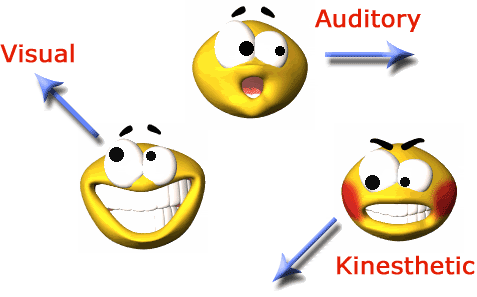
Neuro linguistic programming (NLP) models state that people think and perceive things using three different NLP models; Visual, Auditory or Kinesthetic.
Read the descriptions of each of these models below and try to decide which one best applies to you:
Visual

Visual people make sense of words by recalling or constructing images in their mind. If they can’t make a mental picture of what you are saying they may have trouble understanding you.
Visual people tend to use words such as “I see“, “looks good“, “I can see the light” and “I can see what you mean“. Visual people will also tend to describe things in great detail, painting a mental picture for you with their words.
In relationships, visual people tend to be primarily attracted to the way another person looks.
Auditory

Auditory people make decisions based largely on how things sound. They often talk and/or repeat things to themselves in order to understand something.
Auditories tend to use phrases such as “that sounds great” and “I hear you loud and clear“. It is not uncommon to find auditory people humming or singing to themselves whilst they work.
In relationships, auditory people find a person’s tone of voice to be seductive and attractive.
Kinesthetic
Kinesthetic people are feeling people and tend to react through a feeling mode. They get a gut emotion talking to you, and may feel hot or cold about you after just a few minutes.
Kinesthetic’s can also be quite sensitive and emotional people, using phrases such as “that really hurt me“, “I can feel your pain” and “I feel great“.
Kinesthetic people are attracted to others who make them feel a certain way.
Communicating With Your Subconscious
Most people are able to easily identify their dominant NLP model. It should be noted though, that you actually use all three models but you will be dominant for only one or two.
Once you have determined what your dominant NLP model is you can then move on to the five step process, detailed below, to communicate with your subconscious mind.
The purpose of this communication is to align your emotions and behaviors to become more supportive of the behavior that you are trying to change, improve or develop in your life.
This process can also be used to identify and eliminate limiting subconscious beliefs that may be stopping you from achieving the goals which you set for yourself.
1) What do You Want to Change?

The first step of this process involves deciding upon what it is that you wish to change in your life. For example, you may wish to lose weight and have a thin and attractive body by stopping eating junk foods and exercising every day.
2) Receive a Subconscious Signal
Since most of our habitual behaviors and thoughts are controlled at the subconscious level, the next step is to communicate with your subconscious your intention to achieve your new goal. To do this, you must be in a relaxed meditative state (ideally in an alpha state).

When you are relaxed, clear your mind and allow it to go blank and free of thought. After attaining this state, you must now pose a question to the subconscious which can only be answered as either “yes” or “no“.
For example, if in step one you decided that you want to lose weight, you should ask your subconscious if it supports your goal to lose weight.
The answer that you receive from your subconscious will come to you in the form of your most dominant thought process. This will be one of the three NLP models (i.e. visual, auditory & kinesthetic) that you determined earlier on.

The type of reply that you receive from your subconscious mind can vary depending on your dominant NLP model. Some of the things that might happen for each different NLP model are listed below:
Visual
If your predominant thought process is visual, then be aware of any images in your mind that appear in response to your question.
Are these images dark, light, big or small? Your subconscious may change the images you see such as by making them bigger and brighter signaling “yes“, or darker and smaller signaling “no“. You may even seen a flashing “yes”!
Auditory
Auditory people will most likely experience some kind of sound. So be aware of sounds in the background or sounds originating from your body, such as your stomach, in response to a question.
Louder sounds may indicate support for your question, whilst quieter sounds may signal that there is some opposition to what you have asked.
Kinesthetic
Kinesthetic people tend to feel some form of physical sensation in their body. You might become aware of your fingers tingling, a sudden itch, an involuntary leg twitch or an increased heartbeat. You may also get a “gut” feeling in response to your question.
Generally the more intense the physical sensation, the greater support or agreement there is to the question that you have asked.
Cautionary Notes
The responses for each of the NLP models previously given are just guidelines, and so you may experience other signals in response to your questions.
It is also important to remember that you may also receive messages from your less dominant thought processes, so if you are a predominantly visual person, then you might also get auditory or kinesthetic signals.
It may take you several sessions to get used to and understand this process, especially if you have never meditated before or are unfamiliar with NLP techniques.
It will also take practice in order to be able to keep your mind calm during the rest of this five step process, as it can be common for beginners to become overly excited by receiving a reply from their subconscious and then be unable to regain their focus for the rest of the process.
3) Discover Your Secondary Gains
Often there may be a conscious desire for a person to be thinner and lose weight, but at the subconscious level there are “secondary gains” which override this initial desire.
For example, losing weight may mean attracting more attention from other people and having to deal with the pressures of dating. In this case, by not losing weight, the subconscious is protecting the person from the pressures that they may associate with dating.

Everyone has secondary gains for the behaviors that they wish to change, but have so far been unable to successfully change.
So during this stage of the process, your aim is to think of as many possible secondary gains as you can for the behavior that you are trying to change or replace.
Present these secondary gains to your subconscious in a “yes” or “no” format as you did in the previous stage to determine which secondary gains your subconscious is using to protect you.

To get your subconscious to stop protecting you through these secondary behaviors, you need to acknowledge what it was doing and thank it for that protection.
Next, ask your subconscious if there are other ways to protect yourself from the perceived threat, besides the undesired behavior. Use “yes” or “no” questions to learn these alternatives.
For example, ask if you can protect yourself from dating by choosing not to date for a certain period of time or only dating certain types of people.
4) Create a New Behavior
After discovering your secondary gains, the next step is to create a new behavior in replace of your old behavior. It is important at this stage to create a new behavior that is realistic and can be completed within a realistic period of time.

An unrealistic goal will largely be ignored or rejected by the subconscious, so if you do have a large goal that you would like to achieve, it is better to break that goal down into a series of smaller goals.
For example, if you wish to lose weight this could be done by replacing the behavior of eating more with eating less, or replacing the habit of eating junk foods with eating healthy foods.
You are unlikely to be successful at doing this, however, if you decide that you are going to stop eating junk foods entirely and immediately.
You are more likely to be successful if you create a new behavior of reducing the amount of junk foods you eat and increasing the amount of healthy foods you eat slowly over a period of time.
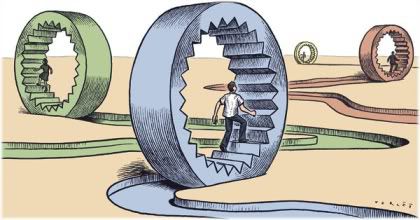
If you are unsure what new behaviors to create that will support your goal, then ask your subconscious to create three new behaviors that it will support.
Be aware of any ideas that pop into your mind, and then clarify them with the subconscious using yes/no questions to see if they are seen as acceptable.
Remember, the new behaviors that you decide upon to support your main goal must be realistic and achievable within a reasonable period of time, as this will increase the chance of those behaviors being accepted by the subconscious and will also give it time to adjust to those changes.
5) Identify Conflicts
Your goals must be what you really want both consciously and subconsciously, otherwise there will be an internal conflict within you and you will not achieve those goals.
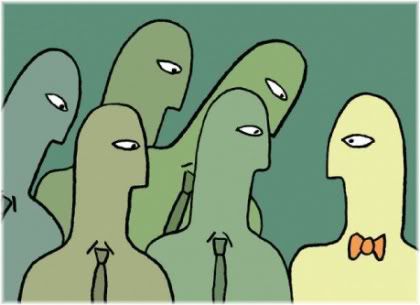
For the new goal and behaviors that you have created, check to see if your subconscious accepts it and if there are any secondary gains which could block you from achieving your goal.
If there are, repeat the five step process for those blocks. For the new behaviors that you have created, instruct your subconscious to generate those behaviors automatically when they are needed.
Sentence Completion Exercise
Sentence completion exercises are a deceptively simple yet powerful tool to identify problems, clarify a situation or find an answer to a question.
They can also be used as a means of raising your awareness and understanding of a subject, whilst at the same time, allowing you to examine the thoughts and beliefs that you have inside your subconscious mind.

Sentence completion exercises will only take a few minutes to do and can be done by hand or on a computer. All you have to do is write an ending to a sentence stem at least 6-10 times. However, there are two rules that you must follow.
Rule 1 – You must do the exercise as quickly as possible, writing the first thing that comes to your mind without worrying about spelling or if it makes sense. This will help to bypass the conscious mind and access the subconscious.
Rule 2 – You can’t use the same ending twice.
Below is an example of a sentence stem, but it could be anything you like. So if you want to find the answer to a question that you have been unable to answer, then pose yourself a question instead.
Living consciously means…
The sentence stem is the subject that you want to increase your knowledge and awareness of, the answers will come from your subconscious and will provide the conscious mind with the information that it was looking for.
Some answers to our sentence stem could include…
…Being in the present.
…Remembering the things I have got to do today.
…Thinking about the consequences of my actions.
…Thinking about my choices and decisions before I put them into action.
…Noticing how I am affected by the things I say or do.
…Noticing how others are affected by what I do.
Ideally, you should do this exercise in the morning Monday to Friday for at least 7 days, or for maximum results, for 14 days in a row. For each day that you complete the exercise, store your answers in draw and do not look at them until you have completed the full 7 or 14 days.
After this period, take out your answers and look at what you have written. You are likely to see many repetitions in the answers to your original sentence stem, but there will also be new endings and these will often be the most valuable to you in terms of raising your awareness about a particular subject or question.

Basically, what this exercise does is to force you to dig deep inside your subconscious mind to find out what’s in there.
The answers from the first few days will likely come from your conscious mind, but as you continue on, your subconscious kicks in and starts giving you new ideas and information which you may have overlooked or not thought of before.
The longer you continue this process, the more effective the exercise will become.
Final step
After reviewing the sentence completion exercises that you have done during the week, the final step is to complete one last sentence stem. Write down one of the following two sentences and complete 6-10 endings.
If anything of what I have been writing this week is true, then it might be helpful if I…
Or
I can use what I have been writing about this week in my life by…
Again, do this exercise as quickly as possible by writing the first thing that comes in to your mind. This last step is crucial, because by completing it, you will be able to use the information that you have extracted from your subconscious mind to consciously benefit and improve your life with.
Reviewed – 27th March 2016