
Whenever one of our needs (e.g., friendship, love, achievement) reaches a certain level of dissatisfaction, we experience a corresponding primary feeling (e.g., boredom, anger, fear, sadness, loneliness or inadequacy) which is meant to motivate us into taking action so that we can fulfill that need.
However, should the actions we take be unsuccessful in satisfying our need, then the result of those actions will lead to the secondary feeling of frustration.
The feeling of frustration indicates to us that the actions we are currently taking to satisfy our need are not effective in doing so.
Therefore, the longer we feel frustrated, the longer our need will remain unfulfilled and the more painful our primary and secondary feelings will become.
All of this “pain” directly affects the body as internal stress, which, given enough time, can have very harmful effects such as increased risk of disease and premature aging.

In order to prevent these harmful effects from occurring, the body then activates its final self-defence mechanism: depression.
Is Depression Good For You?
All depression initially begins as a result of the frustration we experience from ineffectively trying to satisfy our needs. As we continue to experience frustration, our body is put under increasing amounts of stress until eventually it can take no more.
This cycle leading up to depression is just like having your car stuck in the mud with its wheels frantically spinning but going nowhere.
The longer the wheels spin, the more fuel the car will burn, and the more the engine will start to wear out. If this continues, eventually the engine will overheat and the car will break down.
The only way to prevent this from happening is to take your foot off the accelerator and find another way to get out the mud.

In exactly the same way, depression serves to stop you from having a break down. It does this by signalling to you when your body needs time to recover from the stress caused by your frustration.
So rather than seeing depression as something which we should try to deny or ignore, we can now look upon it as an opportunity to reevaluate our current situation and prevent our actions from doing us further harm.
This view of depression as being beneficial to an individual is nothing new. For example, the link below will take you to a BBC news story where a leading psychiatrist in England talks about why depression can actually be good for you.
When a person falls into depression, they often think that their situation is completely hopeless. During this stage of hopelessness, a depressed person will feel as though they can no longer achieve their goals and so will eventually give up on them.
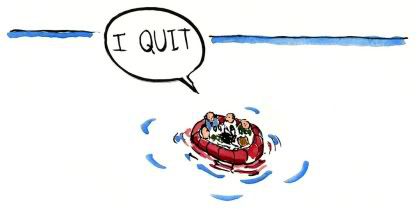
Whilst this may seem like admitting defeat, it is in fact the very mechanism used by depression to prevent you from suffering a total mental breakdown.
Since you are now no longer engaging in the same actions that initially caused your frustration, by stopping those actions, you allow yourself time to recover from the stress that frustration was causing you.
Why it can be good to give up
The period of “giving up” is a very important stage of depression, as it allows you to reevaluate your situation and look at it from a different perspective.

This is something which is not possible when you are feeling stressed out and frustrated, because negative emotions such as these can negativity affect your ability to think clearly.
What this means is that the more stress you are under, the more impaired your thinking will become, which will result in more unsuccessful attempts to fulfil your needs, and therefore, more frustration.
The tertiary feeling of depression helps to stop this process by reducing your levels of stress and frustration.

Once this occurs, and your ability to think is no longer impaired, you are then in a position to take a fresh look at your life and embark upon a new and more effective course of action.
How to Respond to Depression
Use the following guidelines to help you deal with and respond appropriately to depression.
The term “respond appropriately” means to find a way to satisfy your unfulfilled needs which initially lead to your depression, rather than trying to avoid or distract yourself from those feelings.
1) Identify the Feeling

When you feel depressed you feel like giving in because nothing you do seems to work.
Depression should not be confused with sadness, which is a primary feeling that comes from losing something or someone important to you.
Depression is a tertiary feeling, which means that it always comes after your primary and secondary feelings (e.g., sadness (1), frustration (2), depression (3)).
2) Remember the Meaning

The message depression tells you is to stop what you are doing and give yourself time to relax before your body can no longer cope with the frustration and stress that you are experiencing.
3) Identify Why You Are Feeling Depressed

Remember that depression comes as a result of experiencing more stress and frustration than the body can handle. Therefore, to determine the cause of your depression, you must first identify the cause of your frustration.
Ask yourself, what have you been trying to achieve, but have so far failed to do? What need were you trying to fulfil?
What primary feeling (i.e., boredom, anger, fear, sadness, loneliness or inadequacy) lead to your frustration and eventually depression?
Depression is often, although not always, preceded by repeated bouts of failure.
4) Respond Appropriately
The first step to overcoming your depression is to acknowledge what you are feeling, and then give yourself sometime to rest from your normal everyday activities.
You must recognize that you are in depression, and that you need some time to work things out.

You will know when you have received sufficient rest because your levels of frustration and stress will fall to a more manageable level where you no longer feel overpowered by them.
After your period of rest, and when you are feeling ready, remind yourself of step three by identifying what initially caused your frustration and the unfulfilled need which lead to it.
In order to respond appropriately to your depression, you must now think of new ways to satisfy that need.

Whatever ideas you come up with, it is important that you approach things from a new angle. Otherwise, if you keep doing the same things as you did before, you will get the same results and so will fall back into depression again.
It’s also worth remembering that the actions you take to satisfy your unfulfilled needs may not always be successful. In such cases, you are likely to feel frustrated if nothing you do seems to be working.
At this point, you should remember the meaning of the feeling of frustration, that being, that what you are currently doing is not working and so you should try something out.

So rather than becoming discouraged by frustration, use it to guide you towards the right course of action and away from things that won’t benefit you.
Summary
We all have certain needs in life, and when those needs go unfulfilled our body tries to motivate us into taking action so that we can then fulfil those needs.
This motivational energy is generated by the primary feeling associated with that need. However, should the actions we take be ineffective in satisfying our need, we then experience frustration and stress.
Once you reach a point where your stress has become so great that the body can no longer cope, you will have a mental breakdown that could be so severe that it leads to suicide.

To prevent this from happening, depression kicks in by making you feel hopeless and like you want to give in.
This can be beneficial because when you give up on trying to fulfill your needs, you eliminate the ineffective actions that initially caused your frustration and stress.
This period of rest allows your body and mind to recover, so that you can then reevaluate your situation and find a new way to satisfy your unfulfilled need.
Ultimately, depression is overcome by finding a satisfying response to the unfulfilled need which caused you to feel depressed. As long as this need remains unfulfilled, you will always be at risk of falling back into depression.
Reviewed – 25th March 2016