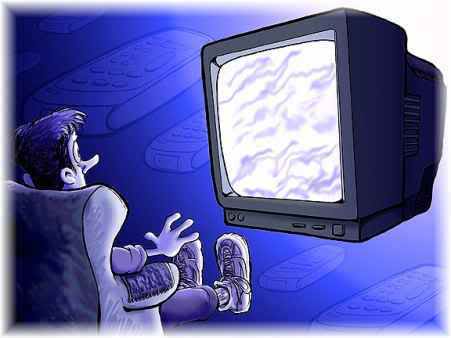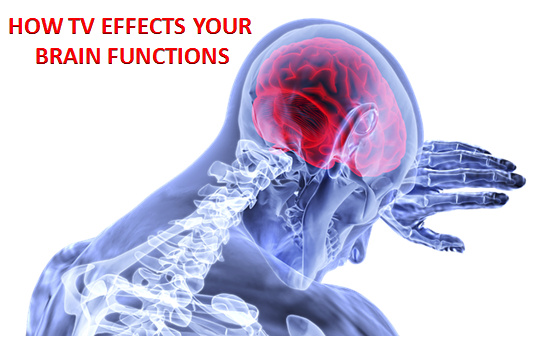
Effects Of TV On The Brain

  • TV has everything you need to program the mind!
  • Your Subconscious thinks TV is real!
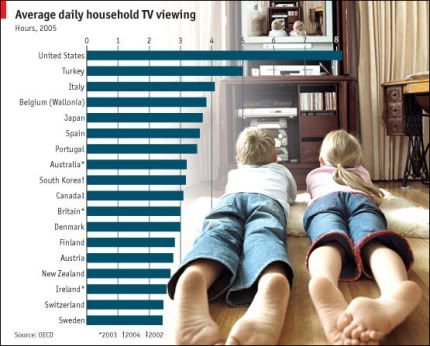
  • 5-6 hours is the average amount of time people watch TV each day!
  • TV physically damages the brain and reduces intelligence!  

You may be surprised to see TV here as a means for influencing the mind, but I decided to include it because 1) almost everyone watches T.V and 2) the basic technology is used in more advanced forms of mind control.

T.V is therefore an excellent example of how to influence the mind due to its effects on the brain. 

effects of tv on brain

The Effects Of TV On The Brain

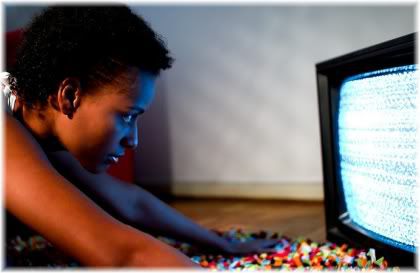
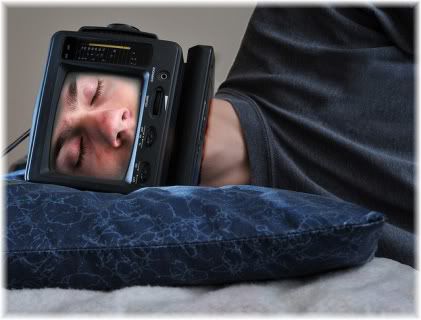
1 - Watching TV puts the viewer into a highly suggestible sleep like hypnotic state. This provides easy access to the subconscious.

2 - When you watch TV, brain activity switches from the left side of your brain (responsible for logical thought and critical analysis) to the right side.

This is significant because the right side of the brain does not critically analyse incoming information, instead it uses an emotional response. This means there is little or no analysis of incoming information.

tv effect brain activity

3 - Right brain activity causes the body to release chemicals which make it feel good (these are called endorphins, a natural sedative with similar properties to heroin).

It is therefore not only possible, but probable, to become physically addicted to TV. This ensures constant daily exposure, a critical factor needed to program the mind.

4 - Reduces higher brain activity, promoting activity in lower brain regions. In other words it makes you less intelligent and behave more like an animal.

For more information about the primative brain and human behaviour, see this article : Welcome To Your 3 Brains

For more information about how TV changes brain waves, see the article below.

TV Changes Brain Waves

Note : Please view the comments for more information and links about the topics discussed in this article.

A Perfect Tool To Program The Mind 

As you can see, TV is an excellent tool to programme the mind. It provides easy access to the subconscious, reduces your ability to analyse incoming information and ensures constant daily exposure via a physical addiction. So why don’t I recommend it to programme your mind?

The main reason is that you have no control over what is coming into your mind, somethings may be good, others bad. I also have concern whether everything I consciously see, is all that there is to be seen. For example…

- Are subliminal suggestions being hidden in advertisements? (such as the word RATS used by the Bush campaign on an Al Gore advert).

- Are words and phrases being used in specifically crafted ways to influence your thoughts? (terror alert, fair and balanced etc…).

- Is TV creating a sense of fear within the subconscious, affecting growth and healing of the body? (e.g. constant exposure to death & murder, such as on the news).

- Does TV make the general population feel powerless and inadequate? (e.g. by being surrounded with beautiful, slim and rich celebrities, who people then compare themselves against).

Unfortunately the answers to these questions are yes, yes, yes and yes. Whilst there are many other examples I could provide, the important point is to recognise that TV is an ideal means for programming the mind.

But who is doing the programming? And do they have our best interests at heart?

For more information on TV mind programming and videos of the above examples see What Are Subliminal Messages. For more information about TV advertisements, see this video.

The Brain Thinks TV Is Real! 

You may think that TV does no harm because you know it’s not real, but did you know that your subconscious believes it to be real? (this is why your heart beats faster whilst watching horror films).

TV And The Army

After the 2nd World War the US Army recognised the need to create a soldier that was more willing to kill. This came after reports that many soldiers would purposely miss or aim low when shooting the enemy. Soldiers did not want to kill, and when they did kill they would feel lots of remorse.

To remedy this, one method that was used (amongst others) was to watch violent images on screen, especially before going into battle. The effect was to desensitise the solider to violence, thereby making them more willing to kill.

Skip forward 50 years to the Iraq war and what do you see? “Hi 5’s” and cheers after shooting or bombing the enemy. That’s programming for you!

Some now feel that the negative effects of TV violence are being passed on to young children, who often imitate what they see on screen.

tv violence children

5-6 Hours Of Programming A Day

On average people watch 5-6 hours of TV a day. This amount of TV will make it almost impossible to reprogramme your own mind (unless viewing is eliminated or reduced).

This figure is only an average, many people (especially children) watch far more than this.

watching tv child

This not only programmes their mind from an early age, but may also damage their brain causing them to grow up and behave more like an animal than a human (i.e driven by basic desires such as sex, violence and food).

If you would like more information on the effects of TV on the brain see this article. 

Also see this article : Triggers Of The Reptilian Brain

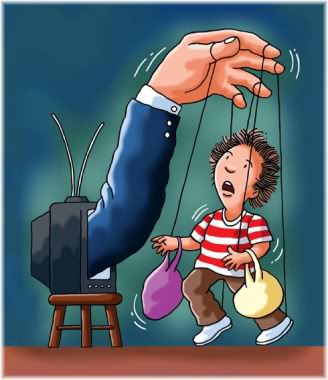
Make Sure You Are Programming The Brain, Not Your TV!

If you want to programme your subconscious for success then you must make sure that YOU are doing the programming not someone else!

tv programming mind

Extra Information -

Please see the comments directly below this article for additional information on TV and how it affects you. 

To see how advertisers use TV to market their product to children see “this documentary“.

If you are unable to see the video below on how TV changes belief systems, you need to install the free adobe flash player.

How TV Shapes Your Beliefs


Bookmark and Share

Related Posts

71 Responses to “How TV Destroys Your Mind”

  1. nevermind Says:

    Thanks for the information. I liked your article. I should have known. I must admit watching TV has really an effect on me.

  2. Morgan Says:

    This site is very usefull. im doing a science fair project and your site is helping alot on finding the info requirred for my project!
    Thank you ALOT!

  3. Dr. Mark Bergquist Says:

    This message needs to be in every home. Please send more information if possible. I want to promote this needed truth.
    Good job on the project.

  4. Aftab Kashif Says:

    This is so true. TV is really a big waste of time. We watch TV for hours together and don’t realize how much time is wasted.
    Instead we can do something productive and constructive.

    Keep up the good work!

    Cheers.

    Aftab

  5. Sandeep Says:

    Hi,
    Do you not approve watching news as well?
    And the programs which make you more knowledgable,
    Thanks for your response

  6. Martin Says:

    Hi Sandeep

    I prefer not to watch the news for 2 main reasons:

    1 - The news is mainly filled with negative information, very rarely is there positive or uplifting news. This affects you subconsciously, instillng fear into the mind.

    2 - i do not believe the news that is shown on tv is completely truthful and unbiased. Many things of importance are not reported.

    If you would like to learn more about the news and how it is reported watch this excellent documentary.

    http://video.google.co.uk/videoplay?docid=6737097743434902428&q=outfoxed&total=227&start=0&num=10&so=0&type=search&plindex=0

    In terms of watching educational videos, i do watch them and feel they can be great sources of information. However the effects of TV on the brain discussed in this article will still apply.

  7. deven malhotra Says:

    what would be the effects of watching too much porn?

  8. Martin Says:

    Watching TV regardless of content will still have the same basic effects on the brain. However certain content may change your attitudes or beliefs regarding certain things.

    For example watching violent films may increase violent behaviour, and encourage the use of bad language.

    Regarding porn, i did see a study on the effects of porn on males once. From memory i recall it mentioning something about lowering mens opinions of women, and seeing them more as sex objects.

    It also mentioned about how watching porn can reduce sexual performance in males (when with a woman) and that there was a negative effect it had on relationships.

    Overall the message was that it reduced a males chances to attract and date women. When men did form a relationship with women it usually did not last very long.

  9. David Scubadiver Says:

    I quit television nearly 2 years ago and am quite happy that I did so. Can’t say it will be permanent, but I find I sleep better than I did. Could be as simple as I go to sleep when I am tired rather than watch television. Or could be that my brain isn’t being put into a coma for a few hours a day making it unready for sleep. Who knows. All I know is I am very happy to not watch the news. :)

  10. Martin Says:

    Hi David,

    Yes you are right, TV can have an effect on sleeping patterns. Although this will vary between individuals, some being more susceptible to sleep disruption than others.

    You may be interested in this article about TV and sleep

    http://www.mattress.com/Howdidyousleeplastnight/Sleep_tv.aspx

    There was also a study done on sleep patterns and tv viewing. You can view the report here

    http://pediatrics.aappublications.org/cgi/content/full/104/3/e27

    Many people fall asleep whilst watching tv, due to its effect on brainwaves. Slowing them down into a sleep like state.

  11. Lamar Says:

    Thx for this very informative article. This article provided the sufficient information I needd for my speech( which I got an A on).

  12. deven malho Says:

    i stopped watching tv on november 27th 2007.
    instead of tv i read books on my computer, listen to music or draw.

    i feel better

  13. Martin Says:

    Thats good new Deven, and that certaintly will benefit you, especially the brain. It will be interesting to see how long you can go without watching TV before the desire to watch returns.

    Stopping watching TV completely can be a very difficult thing to do, although if you can go 30 days without TV you stand a very good chance.

    However with that said I don’t think occasionally watching TV is a problem, its when you spend several hours every day that you can start to do damage to yourself. But stopping watching and reading like you are doing can help to repair any damage caused by the TV to the brain.

  14. Hmmm Says:

    Its not the TV taking over your mind.. its your mind becoming attached to the TV.. Accept the television for what it is and take control of your lives. Stop believing everything you read or hear!! The world is big enough to find evidence for anything you would want to porve..

  15. Martin Says:

    I wish this was the case, unfortunately there is much scientific evidence to prove otherwise. For example, your brainwaves do slow down and you are put into a hypnotic state whilst watching TV (this can easily be measured). This is largely due to the design of the technology. Please see the scientific studies i have linked to, there is lots of hard evidence out there about the damaging effects of TV.

  16. Scott Says:

    Hello,
    I am doing a report for school on the effects that telivion and video games have on the imagion and was wondering if you have any resources on this.
    Thanks

  17. Martin Says:

    Hi Scott,

    TV has been shown to decrease creativity, so while doing this project you may want to stop watching TV to ensure you produce the best work possible.

    In general you want to focus on the effects of TV on the brain, and how this effects creativity.

    To start I would focus on how TV slows down brainwaves, putting the viewer into a sleep like state. In addition i would also mention that TV viewing decreases brain activity because when watching TV the brain doesn’t have to construct images by itself.

    For example when reading if talked about a ps2 your brain would have to make up that image itself, and so will require greater brain activity than if you saw a ps2 on TV.

    If you do not challenge your brain very often, this will lead a reduction in creativity as you are not used to thinking for yourself.

    Here are some articles on effects of tv on brainwaves and creativity of the mind.

    http://www.corporations.org/media/tv.html

    http://dieoff.org/page24.htm

    http://www.cyc-net.org/today2001/today010907.html

    http://www.chicagowaldorf.org/newsletter/school-bulletin-for-the-week-of-december-13-2006

    http://www.br-online.de/jugend/izi/english/televizion/16_2003_1/e_singer_television.htm

    http://serendip.brynmawr.edu/bb/neuro/neuro05/web2/xlim.html

    I also would discuss how this effects child and adult life, for example links between TV viewing and ADHD in children and Alzheimer’s in adults. This is directly linked to under activity of the brain. Remember, a healthy brain is an active brain, when it is not used it begins to weaken and break down.

    Here are some articles on this

    http://www.neuropsychiatryreviews.com/may04/npr_may04_excessiveTV.html

    http://www.whitedot.org/issue/iss_story.asp?slug=ADHD%20Toddlers

    http://www.mindfully.org/Health/2004/ADHD-TV-Link5apr04.htm

    http://news.bbc.co.uk/1/hi/health/1204894.stm

    You may also want to mention the effects of tv on sleep, which i provided a link to in an earlier comment. You may want to incorporate that study with the following research which talks about the importance of sleep for creativity. This can be another way tv reduces creativity by affecting sleep.

    http://www.cnn.com/2004/HEALTH/01/21/sleep.creativity.ap/index.html

    So basically focus on how TV effects the brain, and how it reduces brain activity which then reduces creative and independent thinking skills.

    Maybe you could structure your report something like this?

    Start by saying what the aim of your report is

    Briefly describe what creativity is

    What happens to your brain when you watch TV (this will be the meat of your report) for example, imaging in the brain, brainwaves, concentration, brain activity etc.. show studies that talk about school performance and watching tv

    Possible harmful effects of TV in child and adult life, e.g. ADHD, Alzheimer’s due to under use of brain

    conclusion - what does the evidence suggest. is tv good or bad for creativity? and why.

    additional resources -

    http://www.tvsmarter.com/documents/school.html

    http://www.tvsmarter.com/documents/alpha.html

    http://changingchannels.org/pages/articles.php

    http://www.screenblock.com/data.htm

    http://www.drspock.com/article/0,1510,3984,00.html

    http://www.myfavoriteezines.com/articles/TV-watching-pros-cons.html

    http://www.leaonline.com/doi/abs/10.1207/s1532785xmep0603_3

    http://www.disinfo.com/archive/pages/article/id1149/pg2/

    http://www.turnoffyourtv.com/

    http://uaedining.com/ShowPage.aspx?PageID=216

    http://news.bbc.co.uk/1/hi/talking_point/3197375.stm

    http://books.google.com/books?id=58kUg63ASpwC&pg=PA115&lpg=PA115&dq=watching+tv+decreases+imagination+in+children&source=web&ots=rJtxJvBOFv&sig=Bs8XDMINkMD9kvtqlF7dZp2DqNU#PPA110,M1

    Video Games -

    I am not really sure about the effects of video games on creativity but here are 2 studies you may want to look at

    http://www.newsflash.org/2002/09/si/si001321.htm

    http://serendip.brynmawr.edu/bb/neuro/neuro02/web3/mschlimme.html

    I would just point out that it really depends on the type of video game you play. Give examples of different types of games, in particular educational games that are on the nintendo ds. i wrote an article about how nintendo ds was used to improve children’s grades at school in the mind power section. So some games (learning based games) can improve creativity.

    I would very much be interested in reading your final report and possibly publishing it on this website when it is finished. So if you don’t mind please send me a copy when you are done.

    Martin

  18. Scott Says:

    Thanks, you helped alot.

  19. anonymous Says:

    umm..what exactly would be the procedure of this project?
    i am doing a science fair project just like it. THANK YOU!

  20. Martin Says:

    This is not a project, just an article i wrote. Although many people seem to find it useful for their science fair project!

    Scott was writing about the effects of TV and video games on imagination.

  21. Chris Outwright Says:

    I had a dream . . .
    that I would finally sever the TV sat cable and go on living a successful, gratifying life and be challenged.
    I did it, on the 25 of January 2008 at about 2 past midnight!!
    I found that after lot of exposure to TV (would personify myself with characters and motifs on the tube) I would get depresses (especially in the morning) because I havn’t done anything the night before. I reckoned that I could just limit watching TV but there was often a relapse on my part. By simply cutting out TV altogether I feel absolutely free, I’m law unto myself! In the back of my mind, I can assure myself that if I wanted to enjoy a film, I could always grab one in a store SeleCtively!, thereby making me more attentive and critical instead of being slow. By using by freetime in this way I can lay the ghost of the past.

  22. amy Says:

    wow im very impressed, such posotive and intrieguing work thankyou for this great informative article, i was oblivious to just how detrimental Tv is. Im writing an A-level article reguarding the effects on infants and children and this is a great resource thankyou very much and keep up the good work geting the message out there x

  23. Martin Says:

    Found this article today called “The Myth Of Educational TV”.

    http://news.yahoo.com/s/nm/20080212/tv_nm/sigman_dc

  24. shubhi Says:

    hi,
    I have a project on how tv distort people’s estimate of affluence in real world…your article has been a great help for me.

  25. Victoria Says:

    Hi,
    I am giving a speech in a few days. I was given a real court case and i have to prove the innocence of a 15 yr old who burglarized a home then shot the 80 yr old woman inside then took off in her car. The defense is pleading not guilty by reasons of insanity due to watching 6 hours or more of tv a day, loving crime shows, and had just finished a movie which had a similar scene in which he had just committed. Do you have any links or any information to try to prove that tv can make one go insane, or possibly the fact that the brain never switched back “on” leaving in a state where he was brainwashed and diddnt know what he was doing was wrong?

    Thanks

  26. Victoria Says:

    …and one more thing…your site has been very helpful but i have to give reasons as to why my sources are credibile. Are you just a journalist, or do you have a degree of some sort in this field?…oh and could you tell me where you recieved your infomation about the army and tv as well?

    Thanks again

  27. Martin Says:

    Ok, well there are studies which claim to show an increase in violence with TV viewing. If you have a look at the links I provide, you should be able to get more information to support that claim.

    http://news.bbc.co.uk/1/hi/entertainment/tv_and_radio/1949427.stm

    http://www.parentstv.org/ptc/publications/reports/stateindustryviolence/main.asp

    http://www.bmj.com/cgi/content/full/310/6975/273

    http://www.aber.ac.uk/media/Modules/TF33120/tv-violence_and_kids.html

    http://www.media-awareness.ca/english/issues/violence/violence_entertainment.cfm

    http://www.ns.umich.edu/htdocs/releases/story.php?id=1108

    http://www.newscientist.com/article/dn2109-tv-viewing-linked-to-adult-violence.html

    http://www.tgorski.com/news_analysis/child_tv_violence_linked_to_adult_violence.htm

    http://www.icce.rug.nl/~soundscapes/VOLUME05/MIRROR/Msnbc.html

    http://news.bbc.co.uk/1/hi/entertainment/tv_and_radio/1899533.stm

    http://www.prisonplanet.com/articles/december2005/301205mindcontrol.htm

    http://www.prisonplanet.com/articles/february2006/020206torture.htm

    http://www.apa.org/releases/media_violence.html

    http://www.ppu.org.uk/education/media_violence_survey-c.html

    http://archives.cnn.com/2002/HEALTH/parenting/03/28/kids.tv.violence/index.html

    http://www.media-awareness.ca/english/resources/research_documents/reports/violence/nat_tv_violence.cfm

    Although you must be prepared for counter arguments, as some believe there is no link between TV and violence.

    http://www.icce.rug.nl/~soundscapes/VOLUME05/Television_aggression.shtml

    Personally I do believe TV has an effect, although there are many other factors to consider. Was this person on any kind of psychotropic drug (e.g Ritalin, Prozac etc…)? There seems to be strong link between these drugs and violent shootings. There is more information here…

    http://www.antidepressantsfacts.com/2000-05-16-School-Shootings-Psychotropic-Drugs.htm

    Video games are another factor to consider, especially for the age range you are talking about. Video games seem to increase and develop an instinctive firing response.

    What this means is that if you see something pop up in front of you, you become trained to shoot it without thinking. Like a reflex action. If you look at the military and their training, you will see that in WW1 and WW2 soldiers were less willing to kill than they are today.

    One of the training programs implemented after WW2, was to train soldiers by having them shoot at things that pop out at them unexpectedly. This helped to develop an instinctive firing response.

    Today we see a more advanced form of this in video games. The US Army has even created a video game called Americas Army, and it is known they use video games for training. Here is some more information about this…

    http://www.military.com/NewContent/0%2C13190%2C122704_SubstanceAbuse%2C00.html?ESRC=dod.nl

    http://www.collisiondetection.net/mt/archives/2002/10/can_videogames.html

    http://tkdtutor.com/06Concepts/Psychology/Killing.htm

    this link has some good information about the army

    http://enmasse.ca/forums/viewtopic.php?p=133459&sid=a14b60189e91ee586d087b456bc69cbc

    http://gamepolitics.livejournal.com/211037.html

    So TV viewing, psychotropic drugs and video games all seem to be key factors in violent behavior. Other factors to consider could include location, is the area known for guns or gangs? Poverty is usually interlinked with this.

    If you are giving a speech and your audience is going to make a decision immediately after you speak, it would be best to go after the first person has spoken. This will invoke something called the recency effect, and your points will still be fresh in your audiences mind.

    People will remember the first and last parts of your presentation the most. So use those parts wisely, and make sure you conclude your main points properly. Make it very clear the conclusion you have come to, otherwise the audience will come to their own conclusion.

    Repetition of key points will also enhance acceptance of them.

    In general, try to make every word count. Speak simply, clearly and to the point. Try to avoid technical jargon, and use commonly used words.

    Also use pauses for dramatic effect, or to highlight key points. Do not talk without pauses. This lessens the impact of your message, and makes it seem rushed.

    If you can use vivid, graphic, descriptive language, this will make your presentation more powerful. A good way to do this is through a story. This creates interest in the audience, and will stay in their mind. For you this could include a quick description of the crime.

    If you have a complex idea, use analogies to make them easily understood.

    If possible use visual aids. Today people are very visual, and so images or charts will add greater impact to your message and make it more memorable.

    You could even use shock tactics with images. This will also gain you attention and interest from the audience. For example, show a picture from a 1950s movie, then show something from today, like a torture scene from Hostel. However make sure you make eye contact with the audience, rather than continually look at your visuals.

    I understand your need for valid references. Hopefully you will be able to find some amongst the links I provided. This site is not meant for research, but rather general information and public awareness of key issues. That’s why I don’t reference anything, as it’s more of a casual information site expressing my thoughts and information I have researched in the past.

    Yes I do have a degree, which I obtained here in England. My field of interest largely focuses on the brain.

  28. Victoria Says:

    Thank you so much!!!
    and thanks for the tips about speaking…but I only have 3-4 min to talk so not sure if i can do the whole pausig thing. I have so much research on this topic now that it is very difficult to condense it to only 3 min of talking.

  29. Big Al Says:

    Martin,

    Im doing a research paper on the negative effects of the media on the brain. Alot of what you said I agree with completely however due to the fact that this is a research paper I cannot quote you unless I provide statistical information to back up what has been quoted. I would greatly appreciate it if you knew of studies that proove that television induces a hypnotic state, causes the viewer to think less intelligently, shows right brain stimulation over left, prooves that t.v can be addictive. If you have knowledge of such articles or studies please share them. Also If you think there may be some other statistics or studies that could be of assistance I would appreciate those. Thank you for the help.
    Big Al

  30. Martin Says:

    Hi Big Al, Here are some articles you may find helpful regarding television, brainwaves and addiction. I have included some other articles for general reference.

    You may find it easier to right click and then open the article in a new tab.

    http://www.salient.org.nz/features/television-tune-into-static

    http://www.tri-vision.ca/documents/TV_Addiction.pdf

    http://www.sciam.com/article.cfm?id=0005339B-A694-1CC5-B4A8809EC588EEDF (original source of link above)

    http://truthaddictsanon.blogspot.com/2006/12/what-television-is-doing-to-you.html

    http://fleurdelalune.blogspot.com/2005/10/medical-facts-about-watching-tv.html

    http://www.causeof.org/brainwaves.htm

    http://www.cognitiveliberty.org/5jcl/5JCL59.htm

    http://www.motherearthnews.com/Nature-Community/1979-03-01/Television-Dims-Mind.aspx?page=3

    http://www.trance.ch/papers/interview.htm

    http://www.whale.to/b/television.html

    http://www.sondraslair.com/television.html

    http://www.lewrockwell.com/rogers/rogers216.html

    http://www.proliberty.com/observer/20060218.htm

    http://earthops.org/cult/influence.txt

    http://www.turnoffyourtv.com/healtheducation/addiction/addiction.html

    http://www.mondediplofriends.org.uk/documents/sigman_voodoo1260.pdf

    http://www.sciencedirect.com/science?_ob=ArticleURL&_udi=B6VB9-4HMFJGJ-1&_user=10&_rdoc=1&_fmt=&_orig=search&_sort=d&view=c&_acct=C000050221&_version=1&_urlVersion=0&_userid=10&md5=37b210ce645b7d4c32d621d0dab6364e

    http://serendip.brynmawr.edu/bb/neuro/neuro05/web2/xlim.html

    http://www.leaonline.com/doi/abs/10.1207/s1532785xmep0603_3

    here are some additional links

    http://www.mackwhite.com/tv.html

    http://www.redicecreations.com/specialreports/TVADHD.html

    http://www.redicecreations.com/specialreports/brainwash.html

    http://www.redicecreations.com/specialreports/2006/03mar/massmindcontrol.html

    http://www.redicecreations.com/news/2005/03mar/tvminds.html

    http://www.redicecreations.com/news/2005/04apr/tvbully.html

    http://www.redicecreations.com/news/2004/TVhealth.html

    http://www.redicecreations.com/winterwonderland/dreamtv.html

    http://kentroversypapers.blogspot.com/2005/06/tivo-disrupts-tv-viewers-hypnotic.html

    http://tvsmarter.com/documents/websites.html

    http://www.sciencedaily.com/releases/2006/04/060425015643.htm

    http://www.theturning.org/folder/tuningout.html

    http://news.bbc.co.uk/1/hi/health/4795287.stm

  31. Big Al Says:

    Thanks so much Martin

  32. hannah Says:

    do u disaprove watching shows such as animal planet and discovery chanlel and what about sports?

  33. Martin Says:

    Hi Hannah,

    Watching TV regardless of content still has the same basic effects on the brain.

    Does this mean you should not watch TV at all? Well that is for you to decide.

    I do watch TV occasionally, mainly documentaries, although I also enjoy watching films. However I know that when I do watch TV I am damaging my brain and reducing my intelligence.

    There certaintly are benefits watching educational documentaries, although the negatives outweigh the positives, so I feel it is best to limit TV and read more instead.

    The only people I disprove of watching TV are young children, because they do not know about the harmful effects of TV and their brain is still developing which makes the effects even more harmful.

  34. Atara Says:

    Thank you so much for this article! I was just wondering where you found the study about the training the soldiers to go fight after WW2- Thanks!

  35. Martin Says:

    Hi Atara,

    Here are some links you may find useful :

    http://www.focusonyourchild.com/develop/art1/A0001089.html

    http://www.amazon.com/review/product/0316330116?filterBy=addFiveStar

    http://enmasse.ca/forums/viewtopic.php?p=133459&sid=a14b60189e91ee586d087b456bc69cbc

    http://www.commondreams.org/views04/0517-09.htm

    http://www.neiluchitel.com/?p=155

    http://davecoop.net/killing.htm

    http://www.west.net/~antipas/magazine/articles/trained_to_kill.html

    http://www.thewe.cc/contents/more/archive2004/august/ww2_soldiers_did_not_kill.htm

    http://one-salient-oversight.blogspot.com/2007/08/soldiers-who-don-shoot-and-those-who-do.html

    http://seattletimes.nwsource.com/html/nationworld/2001984566_combat21.html

    Although watching violent images on screen certainly may desensitize someone to violence, I am not suggesting that watching violent films will turn you into a trained killer. Rather it is a useful aid, in conjunction with other training methods.

    One of the changes that were made to army training was to increase the realism of that training. So for example, rather than shooting at pop up targets that looked like a target (i.e. a bulls eye) soldiers began firing at more realistic looking targets that resembled people.

    This was primarily designed to overcome the soldier’s natural desire not to fire at a person, whilst also creating an instinctive firing response, whereby they become trained to shoot rapidly when a threat appears (rather than hesitate and risk being killed).

    Because technology is far more advanced today, training can be made even more realistic. In live fire exercises some training grounds incorporate a variety of special effects to make the experience as realistic as possible.

    Training may also occur via computer games, or virtual reality simulators. One of the first games used for this purpose was a game called Doom.

    One game which is now used for training, and attracting new recruits, is called Americas Army and was produced by the US Army. It is designed to be as realistic as possible, both in terms of locations and weapons a solider is likely to encounter.

    With computers getting even more powerful, games are becoming more and more realistic. A good example of this is Call of Duty 4.

    All of these training techniques serve to desensitize a person to violence, which means that it will take increasing amounts of violence to shock a person. A good example of this can be seen with children and horror films.

    When a child first watches a horror film, they are likely to find it very scary and be scared by it. However over time, the more horror films they watch the less likely they are to be scared by them.

    Eventually there will come a time when they are no longer scared by these films, and will require more extreme and violent forms of horror to be disturbed.

    This has lead to ever increasing amounts of violence and gore, both in films and video games. So much so that now more violence and gore is considered to be “better”.

    In fact the film maker Quentin Tarantino once commented about this trend, by saying something along the lines that making films is easy. You just give the people what they want, violence and gore.

    There are now many sites on the internet which now provide people who have become desensitized to “traditional violence” with videos of real executions, real suicides/murders and accidents captured on film.

    I would not be surprised if in the near future we see live executions on TV. But what will happen when people become densitized to that?

  36. Tracy S Says:

    Very interesting topic here… certainly watching stations such as MTV, reality shows, and music videos everyday are the most negative influences. It is possible to watch sensible shows, discovery, animal planet, history channel, and other such channels and come out more knowledgable than before watching. As well, the same TV shows may affect different people in different ways. Some may be very strong and not easily influenced by TV while others may get carried away.

    The producers don’t care at all, they will do whatever it takes to get the ratings and the cash. 20 years ago no one would have dared to broadcast anything to do with gays and lesbians, today it is common on TV (shows like will and grace, tila tequila, etc). Today we might think that it would be terrible to broadcast things such as executions, but who knows what the future holds.

  37. Jim Says:

    Actually, gay and lesbian issues were first addressed, albeit in a comical way, in the 70s by shows such as “Three’s Company”, “Soap”, and singular episodes of programs such as “All in the Family” and “MASH”.

    Martin, can TV ever be educational? If so, how? Is there any benefit to watching TV (including videos and DVDs)? Is watching images online (e.g. YouTube) just as bad a watching broadcast television? Thanks for the info!

  38. Martin Says:

    Hi Jim,

    I believe TV can be educational, especially in todays society where people watch TV far more than they read.

    However there are still the negative affects of TV which must be taken into consideration. So if using TV for education it should be done in moderation.

    When it comes to children, TV should ideally be eliminated completely as their brains are still developing.

    So yes, TV can be educational, but it is also harmful at the same time. However anything done in moderation generally tends to be ok.

    There was something very interesting i heard on the radio a few days ago. It was about stage hypnotists. They said that around 50 years ago, about 25% of the audience were naturally very sugestible and could be hypnotised very easily.

    Today this figure is closer to 65%, whereby the majority of the audience can be easily hypnotised.

    One of the reasons given for this was the increase in TV viewing, which over time can make people very sugestible to sugestion, turning them into “zombie” like creatures.

    In terms of watching images online via the computer, i don’t know. However i have long suspected that watching images via a computer is less harmful than watching them via a traditional TV.

    Although i believe it still is harmful to the brain (but to a lesser extent) as typically these images have been encoded which compresses the image and alters its structure. Somewhat similiar to how mp3 encodings alter a pure wav file.

    I do virtually all my viewing via a computer, and do notice a difference when watching a standard TV. So maybe it is better, but its certaintly not good for you!

  39. Tritoch Says:

    i’m not sure if i know from experience or not, but seriously people that watch TV all night could be doing much more with their time and some get nothing out of it at all except a way to spend their time after work.

    also, it seems that a computer could be capable of similar effects, such as in a game meant to be played for long hours, or simply a movie watched on the screen.

  40. MAJ Says:

    Hi Martin.

    U’ve got lots of interesting stuff here which I find very useful and valuable. I’ve really lessened my tv watching hours recently because I seriously doubt the integrity of most of the tv programs. I don’t like to watch the news anymore because of all the hype and propaganda. Death, murder, political fiascos, everything under the sun that’s negative is seriously glorified. Is this the price we pay for development. If I do watch tv, I make sure I take only the +ve content.

    I’ve just started taking up the subject on power of the subconscious mind when I came across your w/site. I’ve read books by the early gurus ie Wallace Wattles, Dr Joseph Murphy, Napoleon Hill, Michael Losier, etc. and I’m eager to learn more. Its really quite an effort to embrace a positive mindset. I’m still trying.

    Keep up the good work, Martin!

  41. Jude Says:

    Now I realize the downfall tv has on my life. I’m working towards controlling watching tv and reclaim my mind. Thanks for the insight.

  42. Karl Says:

    The tv has made things like 9/11 and 7/7 possible by using sophistacted hypnosis, NLP and fear based programming. People need to turn their TVs off and open an account with Amazon and get ordering some books.

  43. JH Says:

    THANKS ALOT I NEED THIS INFORMATION FOR A SCIENCE FAIR

  44. neslie Says:

    nice article, martin!

  45. Hi There! Says:

    The things that are shown on tv today would have never been allowed to air 20 years ago. Television is just slowly reprogramming our minds to accept more and more violence, sex, and alternate ways of life. Take the Ellen Degeneres show for example. Kids come home and watch a lesbian standing up for gay marriage. That would have never have been on tv 20 years ago. What’s next? Where does it stop?

  46. Kevin Says:

    Great website. I agree with your message. In the 60’s,to help increase TV News viewing, a producer coined the phrase “If it Bleeds, it Leads.” Sad but true, Vietnam War was Evening News big hit.
    Embedded commands (hypnotic suggestions) are riddled through a 15 second commercials to get your attention and buy.

    Please take time and be aware of TV’s hypnotic draw. For your future health, turn off the Television.

  47. jennifer Says:

    thanks i could really use this for my science project

  48. Laura Says:

    My family took cable off our TV a year ago and I don’t miss it at all! It has really had a positive impact on our family, it was the best thing we ever did. This article is awesome and further proves that TV effects us negatively.
    Thanks!

  49. Ellen Says:

    Hey! i was raised in a home with no tv. Even though I have no objections to tv in moderation and parental supervision and restrictions I totally agree with what you have written. :) I think theres good enough reason to stop watching altogether right there in what you wrote! thanks for raising awareness on this subject. …
    By the way, how do you cite this resource? Would it be a journal or a blog?? Im trying to document it as a source for a paper that Im writing…

  50. Martin Says:

    Hi Ellen,

    You are very lucky to have been raised in a home with no tv. Most children are raised by tv, at a time which it causes most damage to their developing brain.

    I agree with you, watching tv in moderation is fine. Just don’t overdo it! The only exception to this are children, especially those under the age of 6. They should not watch any tv at all.

    If you want you can cite this site as a blog, although its not a blog anymore just a regular website.

    Martin

    p.s. there are lots of additional links in the comments to various research papers and reports on tv that you may find useful for your research.

  51. Jamie Says:

    Thanks a ton for writing this, i’ve gotta use this for my essay, really helped =-)

    ~Jamie

  52. Bethany Says:

    Hey,
    I’m doing a research paper on how t.v. effects the infant brain…if any1 knows of some good studies or websites they are willing to share….you’d pretty much be my bff lol

  53. Jane Says:

    Thanks so much for this site! It was very helpful!
    ~Jane

  54. sofia Says:

    good, very good i liked your site!
    it was very interesting.
    i need it a lot.

    byyyyyyyyyyyyyyyyyy
    sofi

  55. Ndimati Says:

    I must say this has really been an eye opener. I was searching online what impact tv has on me because I realise I am addicted. I cannot do without watching tv. I also searched on the topic because I am guessing that tv does have an impact on my memory which is deteriorating. Could tv really be contributing to memory loss, I am only 30 you know! How do I stop?, I have been glued to TV for at least 10yrs now and I have spent a lot of money upgrading my systems. Should I really sell all my appliances? Can the effect be reversed?

  56. Jill Says:

    Hi. I was wondering where all of the information about the killing of brain cells and right brain over left activity came from and if there are any links to those website or a list a books.
    Thanks!

  57. Martin Says:

    Ndimati,

    There is no doubt that tv is not good for you, but does this mean you should stop watching tv entirely?

    That’s really up to you. I don’t think there is anything wrong with watching it occassionaly, but if you find yourself watching hours a day, and are unable to control yourself, then you may want to get rid of your tv completely.

    I have read studies about tv viewing being linked to alzheimers, as well as poor memory (google it). For some reason, digital tv is meant to be even worse than regular tv for the brain.

    You can stop watching tv, by gradually reducing the amount of hours you spend watching it, and replacing that time with some other activity. Ideally, 1-2 hours a week is what you are aiming for, although less would be better.

    As long as you change your lifestyle, you will benefit your brain. The brain is healthy to the degree it is exposed to new and challenging stimuli, tv puts the brain in a sleep like almost unstimulated state, which is why its not good for your brain.

    Have a look at this article i wrote, it is about self esteem, but i talk about things you can do to make your brain healthy.

    http://www.eruptingmind.com/self-esteem-education/

    Jill,

    The killing of the brain cells is largely an indirect process, as a result of the brain not recieving enough stimulation. If you have a look through the comments you will find links which contain the answers to your questions.

  58. laura joan Says:

    i love your page very helpful!!! :)
    doing on a research paper for school! i should of saw this on the first day untill i really needed information! great INFO!!!

  59. Ryan Says:

    Hi Martin this article was great and I was able to use it in a ton of school projects and reports. I also would be happy to inform you by now I have quit watching TV and playing the Call Of Duty games. Once again thanks everyone should be able to get this message, hmm u know what we should put this on tv… Just kidding.

  60. matt botelho Says:

    i feel like your website has helped me alot. i will be in class and sometimes i would just daze off. or i would be having a conversation with someone and i daze off as well. therefore i never new it was watching to much televison. also i fel like now that i dont watch tv no more i feel more inteligent. thank you

  61. irene Says:

    Hi Martin, I too am finding these web- pages rather useful, you see I am working on a presentation for school called the subconscious traps of media where I talk about how media influence our subconscious mind.

    So far this is my content list:
    Power of media
    Tv- mass hypnotist?
    Comercials
    Hidden messages in songtexts
    Brainwashing/earasing old memories
    Scientific experiments
    Master your mind

    Do you know of more subjects I should add to my list or of moore good documentaries?

    I will definitely spread the word of your great web- site among my friends here in Norway, I love it!

  62. Martin Says:

    Apart from the links in the past comments of this article, there is something about the media and how it relates to the brain in the following article:

    http://www.eruptingmind.com/reptilian-brain-behavior/

    (you may want to read it from the first article to get a better understanding of it)

    And this, which gives examples of subliminals, and some books you can download which talk about subliminals and advertising

    http://www.eruptingmind.com/what-are-subliminal-messages/

    some books here may interest you also

    http://www.eruptingmind.com/download-free-self-improvement-ebooks/

  63. Ibrahim Says:

    Hey,
    I just wanted to thank you for the information on how T.V. effects our brains. I had no idea how T.V. effected me and I am grateful to have to information so that I can start limiting how long I watch T.V.
    Thanks again

  64. Frank Martin DiMeglio Says:

    I have definitively proven that TV is an extended form of dream vision. Read the article entitled Television is an Hallucination, and ask yourself where the “experts” have been. Everyone should read this, and legislative advocacy is very much in order. The article is not only highly original, but it explains what television really is. Television is far worse for us than our so-called “experts” have led us to believe. The article clearly proves this.
    Frank Martin DiMeglio (author)
    Now do something about it! Think about the children.

  65. Martin Says:

    Frank, I have deleted your first comment as you have already told us about your article. Please do not spam with duplicate comments.

    Frank’s article can be found here :

    http://radicalacademy.com/studentrefphilfmd11.htm

    It is on my reading list.

    If you have any articles you would like published on EruptingMind, you can contact me via the contact form.

  66. Frank Martin DiMeglio Says:

    Hi Martin. Can you read and comment on the link of mine that you previously listed? Any questions?
    You should love it.
    Do you not agree that legislative advocacy is called for?
    Thanks.
    Frank

  67. Martin Says:

    Frank,

    I would be a bit more careful using terms like “definitively proven” when talking about your article, as from what i have read you offer very little hard evidence to support your claims.

    Rather you have given your own views and opinions on the subject, which is fine, but this doesn’t “prove” anything. Hard evidence, or proof would be something like:

    When (A) happens (B) happens. This was shown by (X) experiment/event/personal experience.

    And even then it is hard to definitively prove something, without having multiple people verify your results.

    I take your point about television being a hallucination, although i don’t agree completely with the title of your article.

    A hallucination is something that does not exist outside the mind, yet a television does exist outside my mind. The television programme itself also exists outside my mind, in the form of actors and producers.

    So how can it be a hallucination? Or are you suggesting that we are living in a dream world, and the world we see around us is not real?

    I do agree with many of the points you make in your article, and that television is a serious issue.

    I’m not sure what you mean by legislative action? Are you suggesting the government bans people from watching tv?

    I certainly believe in educating people, but ultimately the final decision rests with them. People should always be free to make their own choices, and not have other people decide what they can or cannot do. People don’t like to have things forced upon them Frank, but prefer to make their own choices in their own time.

    Think of it this way, who are you most likely to open your front door to? A) Someone knocking on your door, or B) Someone trying to break down your door with a battering ram?

    Obviously the answer is A. So when trying to persuade people to your way of thinking Frank, try being a bit more gentle with how you approach people with issues, and don’t necessarily assume that everything you believe to be true is 100% correct.

  68. laura joan Says:

    hey me again love your page!

  69. Anonymous Says:

    hi martin,
    Thanks to this info I have begun my restriction
    of using xbox or whatching t.v.
    thanks

  70. Lane Says:

    Based on your research, do you think that the negatives of watching television still outweigh the positives when watching for language learning purposes. When I use the word television I am including all sorts (documetaries, films, and conventional cable television). I ask this because I have never been a person to watch very much television and I am now studying abroad in France trying to learn as much as possible. I feel that when I am alone trying to study there is a limit to how much a book can teach you because you are not hearing the words themselves. Any thoughts?

  71. Martin Says:

    Lane,

    I think what you are referring to is active viewing, whereby you are studying what you see and hear on TV. Passive viewing is watching something purely for entertainment, without trying to analyse it.

    Active viewing is far less harmful to the brain, and overall i would say it would be benefical for you as learning a new language is good for the brain.

    Although due to the nature of television, you may find yourself slipping in and out of the hypnotic trances tv puts you in.

    If you are doing a lot of reading also, then you really have nothing to worry about as reading tends to “neutralise” the effects of tv.