
Fear occurs as a response to something which is perceived as being threatening, dangerous or harmful. Fear can cause a person to feel nervous, anxious and can even impair their bodily functions by interfering with their ability to think clearly, speak with a steady voice and keep a steady hand.
Nobody likes to feel fearful because it is a negative and unpleasant emotion. However, it is also a very useful emotion to have, because the main purpose of fear is to alert your attention to, and prepare your body for, a threat that could potentially harm or even kill you.
If you did not feel afraid in certain situations you would end up doing things that needlessly endangered your life, thereby increasing your risk of suffering from injury or death. So in other words, you need to feel fear in order to keep yourself alive.
Types of Fear
Did you know, that when you are born you only have two inbuilt or innate fears? A fear of falling and a fear of loud noises. These fears are built into your DNA, and are passed down from generation to generation as a survival mechanism.
The only purpose of these fears is to keep you alive by alerting you to potential dangers, and then creating an emotion within you that motivates you to avoid danger.

Now, think about the implications of this for the fears which you currently have. If you were not born with the fears that you have today, where did they come from?
The answer, is that at some point in your life you acquired them. Some event in your past caused you to associate a pain or danger with whatever it is that you fear, and so now you are strongly motivated to avoid experiencing those emotions again. In other words, you learned your fear.
The good news, is that for anything which you learn you can also unlearn. But first, you need to understand your fear, what caused your fear and what options are available for to you to overcome it.
So let’s now begin by briefly looking at the two main types of learned fear:
External Fears
Perhaps the most easily recognized fear is external fear. This type of fear is caused by something outside of you which you are strongly motivated to avoid. These fears are usually called phobias. Some examples of phobias, or extreme external fears, could include a fear of spiders, a fear of flying or a fear of rats.
Generally speaking, all of these fears tend to occur after some negative experience with them in the past.
For example, as a child I used find spiders fascinating. I would look at them in their webs, and collect them in jars. But one day, as I was trying to collect a spider from its web in my garden, it somehow managed to get on my finger, wrap its legs around my finger tip and then bite me!
I frantically tried to shake the spider off my finger for what seemed like an eternity. When I finally did remove it, I saw two small puncture marks where the spider bite had been made. I then quickly ran inside the house to see my mum.

Since that experience, plus a few other bad experiences with spiders (and the film Arachnophobia!), I soon learned to associate spiders with pain and discomfort. In other words, these bad experiences taught me that spiders were bad and that I should avoid them. They taught me to fear spiders.
Fortunately, external fears are relatively simple, in principle, to overcome, providing you have a lot of determination and courage. Later, we shall explore some techniques that you can use to overcome such fears.
Internal Fears
Internal fears can be generalized as a form of low self-esteem. They are triggered by external factors that create internal feelings of self-doubt.
They make you feel incapable of doing or achieving something, and so most of the time, you don’t even try to make a start at something. If you do try, you will do so half heartedly and with the expectation of failure.
For example, you may want to apply for a new job, start your own business or ask someone out on a date, but because you doubt your own ability to complete the task successfully, you never bother to make an effort to try. In other words, you give up before you even begin.
Low self-esteem is often a reflection of how your parents treated you as a child, and to a lesser extent, the things that you experience throughout your life.
This is because the most important and influential years, in terms of character development, are your early childhood and teenage years of life because that is when your mind is most impressionable and still developing.

Consequently, any child who received more criticism and punishment from their parents than they did praise and love, will usually develop feelings of inadequacy and insecurity as a result.
Later in life, these feelings translate into fears of failure, fears of rejection, lack of self-worth and self-doubt. In other words, low self-esteem due to low self acceptance.
Note: Internal fears can also be called “subconscious fears” as they are fears that arise as a result of beliefs which have been accepted into the subconscious mind as being true.
For example, if you were constantly rejected by your parents as a child, then you may have developed a subconscious fear of rejection as a result of a belief relating to your rejection experience (e.g., you are not worthy of being loved).
Why You Must Confront Your Fear

When you are scared of something it is an automatic reaction. It is not something that you consciously try to feel. It just happens in response to something. Why you feel scared is because the body thinks that you are in danger, and so it alerts you to that perceived danger by making you notice it and become fully aware of it.
Your body then continues this reaction by increasing your heart rate, breathing and by pumping blood into your muscles so that you can quickly run away or defend yourself.
This inbuilt survival mechanism is called the “fight or flight” response and is hardwired into your DNA, which is why it can occur without you even thinking about it.
The fear that you currently have is inappropriately triggering this fight or flight mechanism, because you have somehow linked the thing you fear to a pain of some kind. So whenever you are presented with the thing you fear, your survival mechanism kicks in because it thinks that it needs to protect you from a danger.

The key to overcoming any type of learned fear is to reprogram your inappropriate fight or flight response.
The only way that you can do this, however, is by confronting your fear. I repeat, in order to overcome your fear you must confront it head on. There is no other way to successfully overcome a fear.
This means that if you are not willing to face your fear directly, then your fear will stay with you throughout your entire life.
You will know when you have overcome your fear, or at least controlled it to a manageable level, as your body will remain calm when you are exposed to the thing that you dislike and would rather avoid. When this occurs, it is a sign that you have reprogrammed an inappropriate fight or flight response that was causing your fear to occur.
Finally, it is important not to expect an inappropriate fight or flight response to switch off instantly, as it can take many repeated exposures to the thing you fear before your fear slowly starts to fade away.
This is known as “desensitization” and describes the process where the strength of your fear decreases the more times you confront your fear without suffering the harm or pain you expected.
Are You More Fearful Than You Should Be?
Many fears are caused by ignorance because people are scared of what they don’t know. The reason for this is simple. When your brain is only given a few pieces of information it tends to fill in the rest of the details by itself.
For example, when you look at a picture on a computer screen, what you are actually seeing is a series of tiny dots. However, because the dots are so small, your brain fills in the gaps and you see it as a complete picture.

The exact same principle applies when it comes to fear. If you start worrying about something which you don’t have all the information about, then your brain will fill in the gaps, and before you know it, you are imagining things which may not even happen or have no chance of happening.
So in order to stand the best chance of overcoming a fear, you need to find out as much as you can about the thing you fear. This way, you will be able to react on the basis of complete rather than incomplete information.
In turn, this will then prevent you from worrying about things that you shouldn’t be worrying about. It will also help to reduce the level of fear that you experience by making you aware of exactly what could happen, rather than making you imagine or guess what might happen.
Identify what you’re really afraid of
For every fear that you have there are certain things which are driving or amplifying that fear. For example, if you are afraid of flying, you are probably not afraid of planes. What you are really afraid of is a plane crashing and you dying as a result.
So to overcome a fear, you first need to identify the drivers of that fear and then systematically work to eliminate them one by one. The more drivers you eliminate, the weaker your fear will become because they are responsible for making you feel anxious, apprehensive or terrified about something.

You can do this exercise for a single fear, or for different fears in different areas of your life, such as those relating to your health, finances, relationships and career.
Next to each fear, write down exactly what it is that you are afraid could happen. For example, you might be fearful of looking foolish, being embarrassed, suffering from harm or even dying. Whatever it is that you feel fearful of, write it down so that you can clearly see the factors that are contributing towards your fear.
For each of your drivers, think about whether they are a real threat to you. For example, if you were made to look foolish in a particular situation, what’s the worst that could happen? Would you be able to recover and get on with the rest of your life?
What you will most likely discover, is that a large majority of the fear drivers that you have identified aren’t really a threat to your life at all. But for some reason, your fight or flight response is acting as though they are.
Logically, the next step is to desensitize yourself to each fear driver. And the better you are able to do this, the better you will be able to overcome your fear. There are several ways that this can be done, and we shall discuss these methods in the next two sections.

But before we do, it’s important that you strongly desire to overcome your fear. As if your desire is weak, you are unlikely to persist in the face of discomfort that confronting a fear will invariably bring.
So for the fear that you wish to overcome, write down why you want to overcome it. What negative impact is it having on your life? How would conquering that fear change your life? The more reasons you can provide, the more motivational energy or courage you will have to confront your fear with.
Two Techniques for Confronting Your Fear
There are two ways of overcoming a fear. You can either face your whole fear straight away, or exposure yourself to it gradually over time. Both of these techniques work by desensitizing your fight or flight response so that it no longer becomes activated, or is activated less, to the thing that you fear.
Let’s have a look at each of these two techniques in more detail:
Immediate Exposure Technique

The immediate exposure technique is perhaps the most brutal and anxiety producing way of overcoming a fear. As the name suggests, this technique involves exposing yourself to the thing you fear immediately and at a high intensity.
For an external fear, such as a fear of spiders, this would involve holding a spider in your hand or letting it crawl all over your body. For an internal fear, such as a fear of asking someone out on a date, this would involve going up to as many women/men as possible with the aim of meeting them again at some point in the future.
As you can imagine, this technique tends to cause lots of immediate anxiety and panic as you are confronting a fear head on. The natural reaction to the emotions that you experience are to get away as soon as possible.
The main advantage of this technique is that it’s generally the quickest way to overcome a fear. This is why it is often recommended that if you suffer from a fear of rejection, that you become a door-to-door salesperson for a while.

The amount of rejections that you receive in a short space of time will desensitize you to being rejected, thereby lessening the emotional effect that a rejection has on you.
The disadvantage of this technique, is that unless you are strongly motivated to overcome a particular fear, you are unlikely to have the will-power to push yourself forward into an uncomfortable situation. As a result, in order for this technique to be effective, one must be willing and prepared to experience failure and discomfort.
When using the immediate exposure technique, it will usually take about 5-10 exposures to the thing you fear for your fear to be reduced or eliminated.
It should be noted however, that a very bad or traumatic experience during any one of these exposures, could make your fear worse and prevent you from taking further action to overcome your fear.
Gradual Exposure Technique
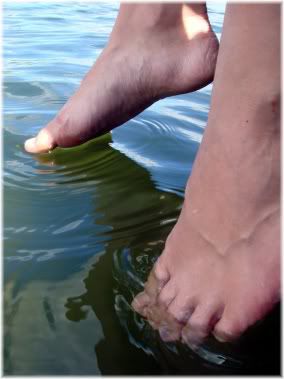
With the gradual exposure technique you gradually expose yourself to the thing you fear in a series of small steps, with each exposure increasing in intensity.
This could be compared to slowly dipping your toe into a swimming pool, and then gradually dipping the rest of your body into the pool as you adjust to the temperature of the water.
Psychologists often use this technique when helping people to overcome phobias, as it allows the patient to progress at their own pace and in a way that they feel comfortable with.
So for an example, lets take someone with an extreme fear of spiders. Whereas the immediate exposure technique would require for them to immediately hold a spider, a gradual exposure technique would first involve them thinking about spiders or looking at pictures of spiders.
They would then be placed in the same room as a spider, and, over a series of sessions, move closer to it until they felt comfortable standing right next to it. The next steps would involve moving their hand closer to the spider, but doing so in their own time and to a level which they are comfortable with.
This process would be repeated until they are eventually able to hold the spider, and then do so for longer and longer periods.

The main disadvantage of this technique is that you will usually need someone with you to help you through the process. Unlike immediate exposure where you can just dive right in, with gradual exposure it can be hard to push yourself forward without help because you have lots of time to think about the thing that you fear.
You can however, still use the gradual exposure technique on your own. For example, if you have difficulty talking to members of the opposite sex, you could start by talking to people who you will never see again, such as by asking a stranger for the time. You can then start talking to salespeople, people over the phone, people older than you and finally, people who you are sexually attracted to.
The basic idea is to gradually desensitize yourself by initially starting with non-threatening situations, and then building up over time to things which are slightly more threatening until you reach your eventual goal.
General Tips for Overcoming Fears
The following tips can be used to help overcome most types of fears:
1) Learn From Near Death Experiences
For a long time I have been interested in near death experiences (NDEs), and have read and listened to many accounts of people who have “crossed over to the other side” and then came back.
What I find most interesting, is that virtually all people seem to tell the same story no matter what their race or religion is. These people tell of a life review where they experience the life they have lived. In this life review, they experience all the pain and joy which they have caused to others.
Most people who have had NDEs talk about it as being an overall positive experience. Some however, talk about hellish nightmare experiences, and when they come back, they completely change their life for the better.
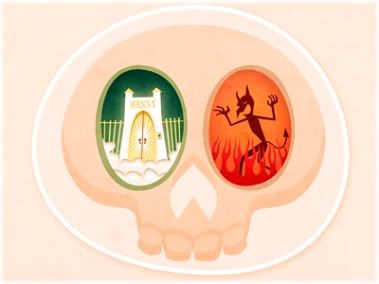
One thing that has always stuck in my mind when reading about and listening to these NDEs, is what these people tell us about life. They talk about how we choose the body we will enter, and therefore, the life that we will live on Earth. Whatever life we choose, we do so purposefully with the intention of learning something that life will teach us.
Whether or not we do learn from that life, is up to us. But if you don’t learn from that life, you will keep on experiencing a similar life until you do. Who knows if this is true or not, but for me, at least, it has helped me to accept the difficult times in my life and then use those experiences to make me a stronger person.
2) Change the Movie in Your Mind
An effective way to decrease the negative power of a fear is to change how your fear is represented in your mind. In most cases, fears conjure up pictures, sounds or feelings of negative events and consequences.
If this is the case for you, then change the movie in your mind to make it seem less intimidating. Perhaps you can add your favorite music to that movie? Or change the pictures in your mind?

Whatever you can do to reduce the fear associated with the mental images that you have from past experience, will serve to greatly reduce the debilitating effects that they have on you.
Remember, fear is only as powerful as its representation in your mind. If your representations carry no imagined negative consequences, then they will automatically lose their ability to impair your actions.
Again, this is why having an attitude of wanting to learn from every experience can be so powerful. As if you are willing to learn from something, then no matter what happens, good or bad, you realize that in the end you still benefit either way.
3) Interrupt the Pattern
The next time that you experience anxiety or fear, stop, and then do something completely different. Change the room you are in. Change what you are doing. Or change the people you are around.
By suddenly changing what you are doing, you will often find that you have interrupted your feelings of anxiety and that they have suddenly disappeared. This occurs because it takes a lot of attention to think about fear. If you remove that attention, you instantly remove that fear.

Pattern interrupt can be used with any kind of emotion. So the next time you want to change an emotion, interrupt it!
4) Progressive Collapse
The progressive collapse technique involves first thinking about all the bad things that could possibly happen from a given situation.
You then ask yourself, what would happen after that, and after that, and after that. You continue this process until you find the extreme of the worst thing that could possibly happen.
…and then?


What you will usually discover, is that the worst thing you thought of wasn’t so bad after all. And most of the time, it won’t even happen anyway.
5) Break Your Habit
When people have a fear they tend to respond to it in a habitual way. As a result, they give into their fear without really thinking about it.
But if you can recognize this habit in yourself, you will then be able to identify those times when you are purposefully avoiding doing something because of a fear that you have associated with it.

If you then confront your fear head on, instead of backing away from it like you normally do, you will eventually change the way that you respond to fearful situations.
Remember, fear can only be overcome by you confronting it. The more times you give into a fear, the stronger it will become and the harder it will be to overcome. Likewise, the more times you stand up to a fear, the weaker it will become and the easier it will be to overcome.
6) Reframe the Situation
How you view a situation determines how you will respond to it. For example, you can either see an experience as being bad or as being good. With a bad experience you will be motivated to stay away from it, but with a good experience you will be motivated towards it.
So when it comes to fear, try to reframe how you view it. This is something we have already talked about earlier, whereby a negative experience can be viewed as a valuable lesson from which you can learn and become a stronger person.
Whatever works for you, try to reframe your fear, or the negative experiences that result from it, as somehow providing benefit to you. If you can do this, you will find fears much easier to confront and negative experiences much easier to overcome.
6) Practice Mental Visualization
Mental visualization is simply a method for imagining situations or events that occurred in the past or may occur in the future, and is widely used in the field of neuro linguistic programming (NLP) for reprogramming the mind.
The reason why visualization can be so effective is because the brain cannot differentiate between an event that is real and one that is imagined, and this is something that has been confirmed scientifically with brain imaging scans such as fMRI scans.

These brain scans show that the same regions of the brain become activated when a person is doing a task in real life or if they are imagining doing that task in their head.
This is quite truly a remarkable finding, because what it means is that you can use mental visualization to prepare yourself for future events by literally rewiring your brain.
NLP visualization technique
To use mental visualization to overcome fear, we are going to use some simple techniques borrowed from neuro linguistic programming.
First, try to imagine in as much detail the thing that you are fearful of. Involve sound, color, touch, smell and taste wherever appropriate. Your aim is to use as many of your five senses as you can during the visualization process.
If you are doing this correctly, you should then start to notice changes in the way that you feel. For example, you may start to feel distress, tense, nervous, panic or just feel generally uncomfortable.
You are also likely to experience bodily symptoms such as trembling, increased breathing, increased heart rate and restlessness, almost like you were really in that situation and experiencing it in real life.
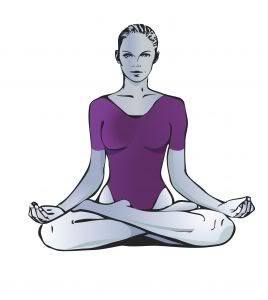
When you have a clear image in your mind of the thing that you fear, the next step is to try to reduce the emotional impact it is having on you.
This can be done simply by changing the mental representation you have in your mind into something that is less threatening. For example, let’s suppose that you have a fear of public speaking. What could you do to make that situation seem less imposing? Less scary?
One thing that you could do is to try adding some humor to the situation. Perhaps you could imagine giving your speech to a bunch of cows in a field and trying to make them laugh with your jokes?
To make yourself feel stronger and more confident when standing in front of an audience, maybe you could imagine yourself as a giant speaking down to a bunch of people who look like ants?
Whatever it is that you do, try to be as creative as possible no matter how silly your imagined scenario may be. What you will soon discover is that when you are doing this correctly, the negative thoughts and feelings you were previously experiencing have suddenly disappeared.
When that happens, you will know that what you are doing is being effective at helping you to reprogram your mind and therefore, the way in which you respond to fear.
The Fear of Rejection

If you feel that the fear of rejection is something which is holding you back, a good exercise to help overcome this fear is to think back to a time when you experienced some kind of rejection.
When you think about that rejection, try to think of any lessons which you may have learned from it. Lessons that eventually made you a better and stronger person. You may not have enjoyed that lesson at the time, but you can now see how valuable it was to learn.
What you will usually find, is that when you think back to past rejections they suddenly don’t seem so bad anymore.
Not all rejections for example, were rejecting you or your ideas. Often, they are due to less personal reasons, such a person having a bad day. And even if you were rejected for being who you are, is it realistic for anyone to assume that they will be liked and accepted by everyone they meet?
The key to overcoming rejection is not to take it personally. So rather than letting a rejection negatively affect you for the rest of your life, learn from it and then use it to make you a stronger person that will be capable of achieving more and greater things in the future.

All successful people have been rejected many times over, and that is why they became successful. Their rejections provided them with valuable knowledge and life experience, from which, they could then use to grow and develop as a person.
This may not be a pleasant experience initially. In fact, it is likely to be a very unpleasant one. But if you can overcome that momentary period of discomfort whenever you are rejected by someone, you will invariably, at some point, experience a much greater period of pleasure as you achieve new and better things in your life.
The Fear of Failure
People who have a fear of failure often have difficulty in pushing themselves forward to achieve their goals. They set out with an expectation of failure, and so many times will never even bother to make an effort to do something.
This can lead to frustration and disappointment, and cause a person to become filled with regret as they look back on their life and wonder what could have been had they not been so paralyzed by their fear.

The effects of a fear of failure are obvious. But I think Steve Jobs summed it up best when he said that people who are afraid to fail usually don’t achieve much in life.
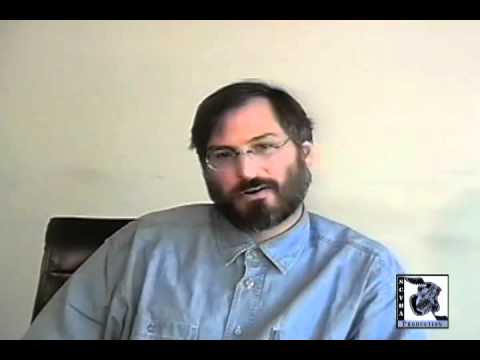
If you are unsure whether or not you have a fear of failure, try answering the following questions to help you find out.
1) Will you work harder to keep from failing than you will to win?
People who suffer from a fear of failure are often motivated to work hard in order not to fail.
Failure is something that is constantly in the back of their mind, and as a result, the actions they take are done to avoid a failure rather than achieve a success. Typically, this involves “playing it safe”, not taking too many risks and staying inside their comfort zone.

On the other hand, people who do not suffer from a fear of failure are motivated to work hard in order to win or be the best. Consequently, their actions are much more adventurous and they are willing to take greater risks and get outside their comfort zone.
2) Do you work harder to keep what you currently have, or work harder to get something better?
If you work harder to keep something you have, this may be because you have a subconscious fear of failure.
Since you are always concerned about losing what you have, you are therefore motivated to keep what you currently have rather than trying to get something better. Again, this involves staying in your comfort zone and not taking too many risks.
People who work hard to get something better are not afraid of losing what they have. They set out with a mindset that even if they do lose what they have, that eventually they will get something much better.
Analysis
As you can see from the previous two questions, the fear of failure causes people to live mediocre lives that are far below their true potential.
Fear of failure prevents people from ever starting to work towards a goal, because they feel that the risk of failing is worse than the victory of success. Often, these people have an attitude of “If it’s not broken, don’t fix it“.
A fear of failure usually comes from your childhood, the stories you hear from other people or movies that you have seen which greatly exaggerate real life consequences. All of these influences can instill a fear into the mind, which then causes you to become much more cautious and reserved than you normally would be.
Typically, this effect is gradual, and develops over several years. However, when a fear of failure does manifest itself, it tends to create a downward spiral whereby the more you give into your fear, the more fearful you become.
The extreme of this would involve someone who fears the outside world and does not leave their home. This is known as agoraphobia.
The Fear of Success
The opposite to a fear of failure is a fear of success. This fear is strongly interlinked with your level of self-esteem and self-worth.
How worthy you believe yourself to be of something will therefore largely determine the amount of success that you experience in life, more so than the skills or education you have.

This makes understanding and improving your level of self-esteem absolutely crucial if you ever hope to overcome a fear of success.
Do you have a fear of success?
An easy way to determine whether or not you have a fear of success is to ask yourself the following questions:
- Have you ever felt that you were close to achieving something big, but then failed at the last moment?
- Have you managed to live a disciplined and productive lifestyle, then suddenly went back to your old bad habits?
- Have you seemed to reach a plateau in your life in terms of success? And no matter how hard you try, you cannot seem to get any higher?
If you answered yes to any of those questions, you most likely have a fear of success.
Now, it may seem strange that people should fear being successful, but what you should understand is that this fear arises from a subconsciously instilled belief that was most likely formed during your childhood and teenage years of life.
What this means is that consciously you may desire success, but subconsciously, for whatever reason, you do not feel that you deserve it.
What causes limiting subconscious beliefs?
The way you were treated as a child, and the things you were told, all helped to create and shape certain beliefs in your mind. Some of these beliefs may have empowered you by filling you with confidence. Whilst others may have limited you by filling you with self-doubt.
These subconscious beliefs directly influence the type and level of success that you will achieve in life. If you were made to feel important and special as a child, you are likely to believe that you deserve success and that success is something you will and should achieve.
However, if you were made to feel badly about yourself, the opposite will occur. Instead of feeling worthy, you will feel unworthy. Instead of feeling that you can achieve success, you will feel that you can’t achieve success.

A person who is filled with limiting beliefs also has low levels of self-esteem. The effect of this is that they subconsciously believe they are only capable of achieving a certain level of success.
If they start to achieve more success than they subconsciously believe they should, they will usually resort to self sabotaging behaviors that will bring them down to the level they believe they should be at.
This is also why people seem to reach a certain level of success in their life, and then can’t seem to get any further. Again, their subconscious beliefs are holding them back at a level they feel they should be at.
How high can you jump?
A good example to demonstrate the previous point comes from an experiment done with jumping frogs. Several frogs were each placed in separate glass jars, and then covered with a lid to prevent them from escaping. Food, air and water were provided for them.
At first, the frogs kept jumping trying to escape, but each time they jumped they would hit their head on the lid. After 30 days, the lids were then removed. Despite the fact that the lids were not there anymore, the frogs never jumped out of the jars. Even though they could have easily done so.
During the 30 days which the frogs were kept in the jars, they learned that they could not escape from the jar by jumping. In essence, they formed a belief that the top of the jar was as high as they could go. Even when the lid was removed, this limiting belief kept them where they were.

This simple experiment shows the power of our beliefs systems. We all formed certain beliefs as a result of our childhood, and many of us still hold onto those beliefs even though they are no longer true and are limiting our innate potential.
To realize your true potential, you must therefore realize that there is no lid on the jar and that you can jump out. To do this, you must never assume that you can’t do something until you have explored every possible option. To use a cliché, you have to learn to think the impossible.
Loving failure
Another reason why people may have a fear of success, can be due to the conditioning (learning) which they received as a child.
If, for example, a child was given lots of attention and comfort by their parents when they failed at something, then eventually they may have learned to associated failure with a pleasant emotion.
So over time, failure, at the subconscious level, became seen as something desirable. Something that made that person feel good. As a result, they began to subconsciously sabotage their actions so that they could subconsciously enjoy another failure.

It’s actually quite common for people to reward themselves for failure, but by doing so, they reinforce the emotional pleasure which they associate with failing.
For example, when you fail at something, it’s a natural reaction to do something pleasant to take your mind off that failure. You may eat some chocolate. Buy yourself some new clothes. Or maybe even have a drink?
All of these things make you feel good, but they also send a message to the subconscious that you are giving yourself a reward for failing. So is it any wonder that people have a fear of success? If they get pleasure from it, why not fail again?
This is why it’s vitally important that you never “reward” yourself for poor performance. Only reward yourself for desirable outcomes, because that is the type of behavior which you want to reinforce and continue.
Reviewed – 31st March 2016