A habit is something you do on a daily, weekly, monthly or even yearly basis that you repeat over and over again in a similar or identical way. These habits can be physical (the way you behave) and/or mental (the way you think) and can broadly be divided into two distinct categories.
The first, are positive or good habits. These benefit your life and help you to achieve the things you want to accomplish. The second are negative or bad habits. These negatively impact your life and will either prevent, or make it difficult for you, to achieve success in areas of your life that are affected by those habits.
You habitual patterns of behavior are therefore an extremely important part of your life, as they make you the person you are. Unfortunately however, most people have, at some point in their life, developed self-defeating habits. The effects of these bad habits are now causing them varying degrees of frustration, anxiety, low self-esteem and/or stress.
Breaking bad habits is obviously something which everyone can benefit from, as by getting rid of your bad habits, you will not only remove the negative effects that they are having on your life, but you will also be doing something to change the direction your life is going in.
In this article, we shall be looking at how you can do this by stopping your bad habits and replacing them with new and beneficial good habits.
However, to begin with, we are first going to look at two important characteristics of habits, the automatic nature of habits and how pleasure and pain play a role in the type of habits you develop. Understanding these characteristics will help you when you begin to learn how to change your bad habits later on in this article.
Automatic Behaviors
Whenever you do something over and over again, it eventually becomes automatic to the point where you can do it easily and without giving it much thought.
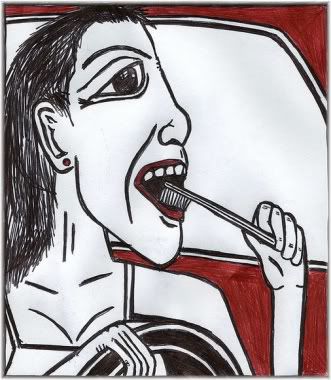
One example of an automatic behavior is the brushing of your teeth. We each brush our teeth around the same time in the morning and at night. As a result, you can literally put some toothpaste on your toothbrush, stick the toothbrush in your mouth and the rest just does itself!
This is one of the major advantages of habits, as they allow you to devote your brain power to other tasks while you automatically do the things that you are already familiar with. In real world terms, this means that you can multi-task.
So for example, while you are brushing your teeth you could be thinking about your day, or while you are driving your car (another habit) you could be talking to someone sitting next to you or chatting on your cell phone.
The key point to understand from these examples, is that because habits occur largely automatically, we tend to have little apparent control over them. As a result, we can often feel powerless to break a bad habit we may have developed and so continue to do it over and over again.
In order to successfully stop a bad habit, you need to break the unconscious automatic hold it is having on your life. You do this by activating the conscious thinking part of your brain. In other words, the first step to overcoming your bad habit is to start thinking about it and why you are doing it.
Later on in this article, we will begin the process of consciously thinking about your habits and also discuss a technique that you can use to override your habit at the subconscious level.
Pleasure, Pain & Behavior
If someone asked you to give up something you really liked, would you do it? For most people, the answer would be no. The simple truth is that people don’t like to give up the things which they enjoy, and the same applies to habits.

People like their habits because they are a familiar and comfortable part of their everyday routine.
If you were to suddenly break their habit by introducing something unfamiliar in to their life, it would case them some degree of mental or physical discomfort. This occurs because they now have to adapt to a new way of doing things.
As a result, this discomfort can prevent someone from making a change to their life, even though they would like to make that change.
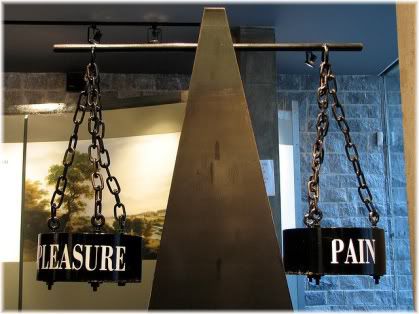
Below is a simple exercise that you can try right now to demonstrate the pleasure-pain principle to yourself.
How pleasure & pain influence your behavior
If you normally use your computer mouse in your right hand, try breaking your habit right now by switching over to your left hand (or switch to your right hand if you normally use your left hand).
Once you have switched hands, go and browse this website for a few minutes, and while you are doing so, pay attention to how you feel using the mouse in your other hand. After a few minutes, return back to this article.
Important: Doing this exercise will help you to better understand how to break a bad habit later on.

Back?
Good!
So how did it feel? For most people, using the mouse in their unfamiliar hand feels uncomfortable as they are not able to move it as well as they normally do. This is entirely natural and expected.
In this quick exercise, you broke your habit of using the mouse with your dominant hand, and as a result, you broke the automatic unconscious control your brain had over the movement of that mouse.
Breaking your habit meant that you had to start consciously thinking about what you were doing, as moving the mouse accurately now became unfamiliar and more challenging.
What you just experienced is known as “psychological discomfort”, and it is a key principle to understand if you are to successfully overcome your bad habits.
The pain of psychological discomfort
People have a natural tendency to be attracted towards pleasure and repelled away from pain. Pleasure can be anything you enjoy, are comfortable with and find easy to do. Pain can mean anything you do not enjoy, find uncomfortable or difficult.
The habits you currently have are pleasurable, because they keep you in your comfort zone. Since you are naturally attracted towards pleasure, the unconscious part of your brain causes you to repeat these habits over and over again.

However, whenever you try to break a habit, such as in the mouse exercise you have just done, you experience pain, because you are now doing something which is unfamiliar, challenging and requires a lot of conscious mental effort.
As a result of this, the unconscious part of your brain causes you to want to return back to your old and familiar pleasurable habit. The trouble is, this often occurs automatically and without you thinking about it which is why stopping bad habits can be so difficult.
If you are now using your mouse with your dominant hand again, then you have just seen a good example of this and how your subconscious mind can automatically control your behavior without you even being aware of it!
What do You Want to Change?

The first step to overcoming a bad habit is to decide upon what habit you want to stop, and then to admit to yourself that it is a habit. So do this now by writing the following sentence stem on a piece of paper.
The habit that I will stop is…
Note: Please write this down on paper and not just think about it in your head. Writing it down will help to increase conscious awareness of your habit, and signal to your subconscious mind that it is something important which it should pay attention to.
If you can’t be bothered to write it down, or you didn’t participate in the previous exercise, then you are signalling to your subconscious that you don’t really want to stop your habit. This of course, will then make it much harder for you to successfully change it.
Now that you have identified your habit, the next step is to decide whether or not you really want to change it.
Do you really want to change?
If you want to stop a bad habit, you must strongly desire to give it up. If you do not have a strong desire to stop your habit, then it is very unlikely that you will ever overcome it as the mind does not easily give up that which it regards to be desirable.

Most people who say that they strongly desire to stop a habit, actually do not really want to stop it. Instead, they just want to avoid the negative effects that habit is having on their life.
In such a case, what needs to be realized is that the undesirable effect cannot be separated from the action. This is especially true when you are dealing with addictions, as it is the very nature of an addiction to want more and more of the thing which you are addicted to.
This is a very important point to remember, because if you only want to avoid the negative effects that a habit is causing you, then you will still view your habit as something desirable. As a result, you will stick with it, and if you do manage to break free, you will constantly crave it and will eventually go back to it.
For this reason, an action and an effect should not be viewed as two separate things, as the more you try to separate an action from an effect, the stronger you will cling to your habits because the more desirable they will seem to you.

For example, many smokers will tell you that they want to give up smoking and are trying to stop. If you ask them why, they will usually reply by saying that they want to stop because it is bad for their health.
However, they will also tell you that they enjoy smoking, which is why they are finding it so hard to give up. As long as the smoker sees smoking as a desirable and pleasurable activity, they are very unlikely to give it up and will always be a slave to their unconscious habit.

I have used the word “slave” purposefully here, because if you don’t have conscious control over your life, then the unconscious part of your brain will control your life for you.
People who do not have control over their lives, and who are ruled by others, are slaves, which is exactly what happens when you have a habit that you cannot stop.
So decide right now that you are going to stop your bad habit, and will no longer be a slave to it. Write the following sentence down and complete it.
I consciously control my life and I am not a slave to my subconscious mind. I strongly desire and will succeed in stopping…
Once you have clearly identified what you want to stop, the next step is to intensify your desire to stop doing it.
Intensify the Desire to Stop a Bad Habit
Consciously deciding to stop your bad habit is only half the battle, as the real difficulty lies in overcoming the unconscious nature of habits. In order to do this however, you need to strengthen the conscious thinking part of your brain.
One very effective way to do this, is to intensify your desire to stop your bad habit by making a list of all the negative effects that habit is having on your life.

So take some time now to think of all the reasons why you want to stop your habit. Is it affecting your social life? Is it affecting how you feel about yourself? Is it affecting you financially?
The more negative effects that you can come up with, the stronger you will make your desire to stop your habit. Do this now on your piece of paper.
The negative effects my bad habit is having on my life are…
What do you gain from your habit?
The large majority of the habits which people have provide them with some sort of benefit. Usually, this benefit acts as a kind of comfort factor.
For example, if a person is feeling unhappy, then they can eat some food to temporarily improve their mood. In cases such as this, a habit becomes a “crutch” upon which you automatically fall back on when something happens to you or when you feel a certain way.
This increases the desirability of maintaining the habit, because it is now seen as something which helps you to get through certain periods of your life. This “help” can come in the form of alleviating boredom, changing your emotional state or overcoming nerves.

However, whilst this habit may appear to help you during these periods, it is in fact only providing you with a short-term temporary solution. One that ultimately has long-term negative consequences on your life.
In addition to the obvious benefits that a habit may provide you with, there are very often less obvious benefits which are causing you to stick with a habitual form of behavior. These benefits are known as “secondary gains” and tend to stem from beliefs rooted deep inside your subconscious mind.
For example, even though a person knows that eating junk food is causing them to become overweight, subconsciously, being overweight means that they can avoid the pressures of dating.
This is just an example, a secondary gain can be anything, and only you will be able to determine what your secondary gains are based on the beliefs you have now and the things you have experienced in your life.

If you would like to find out how to discover what your secondary gains are, please see this article.
Complete this exercise by writing down what you gain from your habit.
My habit helps me to…
The purpose of this section was to get you to start consciously thinking about your bad habit, and why you are doing it. This is an important stage, because initially, overcoming a bad habit is a battle between the strength of your conscious mind and the programmed behaviors in your subconscious mind.
At the moment, your habit is a deeply engrained subconscious pattern of behavior that is causing you to act out your habit automatically with little or no conscious control.
Due to the pleasurable association that has been attached to your habit, your subconscious mind will naturally try to hold on to the habit.
Your job is to strengthen your conscious mind for long enough to reverse this subconscious behavior, which is something that you have already started by reading this article. The next step, is to start forming a new habit to replace your old one.
Forming New Habits Successfully
One of the keys to successfully stopping a bad habit is to find a suitable replacement for it. Without a replacement habit, you will continue to think about your old habit and feel as though something is missing in your life.
By selecting a new habit, you will not only help to fill this void, but will also be able to add a beneficial new habit to your life.

So decide right now what new habit you would like to incorporate in your life to replace your old bad habit with. Write this down now by completing the following sentence.
The new habit that I will use to replace my old habit is…
Now, list as many benefits as you can which your new habit will bring to your life.
The benefits my new habit will bring into my life are…
Change your life to change your mind
In order to successfully incorporate a new habit into your life, you need to think about and plan the actions that you will take to replace your old habit. Such things could include changing your environment, changing the things you buy or changing the people you associate with on a daily basis.

What actions you take will largely depend upon whether your habit is initiated by situational triggers (i.e. certain places which cause you to act out your habit) or circumstantial triggers (i.e. certain events or experiences in your life which cause you to act out your habit).
At this point, you must be willing to make some kind of change in your life, because if you continue to do the same things, you will most likely continue with your old bad habit. Complete the following sentence to help you with this.
I will replace my old habit with my new habit by…
Using visualization to create a new you
The next step to overcoming your bad habit, is to visualize what you have just done in the previous two steps. First, close your eyes and make a mental picture of you acting out your bad habit.
While you are doing this, think about what caused you to act out this habit and the resulting negative effects that habit is having on your life. Take your time to really experience this visualization in as much detail as possible.
Now that you have visualized your old bad habit, you have helped to strengthened your conscious awareness of it. The next step is to visualize the good habit which you have selected and the actions that you will take to replace your bad habit with.

Close your eyes again. Picture the situational or circumstantial trigger that usually causes you to act out your old habit. Now, think of the replacement actions you came up with and then picture yourself acting out your new habit.
Once you have done this, remember to think about the benefits your new good habit is going to bring in to your life by projecting yourself into the future.
The more emotions that you can associate with this visualization, the greater the effect it will have on you. So try to feel really good when you picture yourself acting out your new habit and the subsequent benefits that it will bring.
Some people may consider visualization to be unimportant, and so may be tempted to skip this step or rush through it. Please do not do this, as visualization is an extremely powerful way to reprogram the mind because the brain thinks in images and not with words.
Making a plan of action
Now that you have decided upon the good habit which you will use to replace your old bad habit, the next step is to monitor your progress.
A new habit takes roughly 21 continuous days to become established, and a total of 90 consecutive days to become deeply engrained in the subconscious mind. So in order to make a lasting change in your life, you need to continually monitor your progress during this period.

If you click on the link below, you can download a 90 day habit plan that you can use to monitor your progress. It is in an excel spreadsheet format, and is what I personally use.
Download The 90 Day Habit Plan Chart
How To Use The Habit Plan
Once you have downloaded the habit plan, print out a copy of it. For each day that you successfully act out your new habit (and not your old habit) give yourself a tick for that day, starting with day one. For each day you act out your old habit, give yourself a “X”.
Your initial aim is to get 21 consecutive ticks. Once you have accomplished this, you have established your new habit.
Do not worry or become discouraged if for one day you go back to your old habit. This will happen to some people. But as long as you keep on trying each day, you will gradually strengthen your conscious awareness of the new habit that you are trying to form and the old habit that you are trying to get rid of.
So with the sheet that you have printed out, you will have 90 spaces, or 90 days, in which to get 21 consecutive ticks. This should be your aim for the first sheet that you print out.
After you have achieved 21 consecutive ticks, print out another sheet if you had some days with X’s to give yourself full room to achieve a total of 90 ticks. If you were able to get 21 ticks in a row on your first attempt, without any X’s, you can continue using the same sheet of paper.
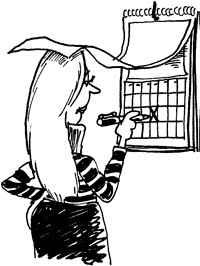
How difficult you are likely to find this final exercise, will largely depend on how well you have understood the points in this article, how strongly you desire to create a new habit and how deeply engrained your old habit was in your subconscious mind.
Remember, in order for the habit plan to be successful, you must be completely honest with your progress. So for example, if you have 10 consecutive ticks and on day 11 you go back to your old habit, you must give yourself an X and start the next day afresh losing your consecutive streak.
This can be frustrating at times, but it is necessary if you really want to get rid of your old bad habit. At 21 days, your new good habit will be accepted into your subconscious. At 90 days, it will become a deeply engrained habit. So do not try to rush or shortcut the process, because it takes as long as it takes.
The reason you must always reset your consecutive count streak, is because whenever you go back to your old habit, that is an indication that it is still seen as something which is desirable by your subconscious mind.
So the longer you can resist acting out your old habit, the weaker it will become and the less desirable it will become. As a result, you will gain much greater power over it and will be able to control it much more easily rather than having it control you as it currently does.
Use the following steps to assist you as you begin your habit plan:
1) Remove anything from your life that is not helping you to change your habits, or making it difficult for you to do so.
2) Take note of the things that are working for you, and use them to your advantage.
3) Add new things to your life that will help you to overcome your old habit.
The first three days are going to be the most difficult, and as a result, you are going to experience some degree of psychological discomfort. This is exactly the same thing that you experienced when you used your mouse in your other hand earlier on in this article.
It is during this period that your conscious mind will need to remain strong, as the subconscious will try to make you go back to your old bad habit.
Use the visualization process (for your new habit only) in the morning when you wake up for these three days, as this will help you to remain in conscious control of your new habit and increase your desire to incorporate it fully in to your life.
If you want to continue the morning visualization after the three days, then please do so, as it will make permanently overcoming your bad habit a lot easier.
Avoiding situational & circumstantial triggers
Make sure you avoid (if possible) the situational or circumstantial triggers that normally cause you to act out your old bad habit, especially during days 1-7. For example, if you are giving up alcohol, then don’t go in to a pub on day 2!

You will most likely find that after day 3 or 4 you won’t “miss” your old habit anymore, and will start to feel as if you have successfully overcome it. Don’t be fooled! Your habit will not be established until 21 consecutive days, and will not become deeply engrained within the subconscious until 90 days.
If you become complacent during this period, you may slip up and return back to your old ways. So always bear in mind that the subconscious will do all it can to get you to go back to your old habit, even if that means tricking you by making you think that you have beat it. Be on your guard!
Reward, Punishment & Behavior Modification
Everything that you do or say is learned. For example, as a child you learned how to behave from the rewards or punishments you received from your parents.
When you received a reward, you became motivated to repeat a certain behavior so that you could experience that reward again. When you were punished, you became motivated not to repeat a behavior so that you would not receive that punishment again.

This simple principle of a desire for pleasure and an avoidance of pain, is the foundation upon which all habits are built, and is therefore something which you can use to change habits which are not benefiting your life into habits which will.
Whilst most people tend to think that punishment is the best way to develop new habits or change old habits, studies on animals and children have shown that the most effective way to modify or create a new habit is by using a reward.
Although punishment can be effective, it also causes feelings of resentment towards the punisher. As a result, a person may repeat a behavior again simply to spite the punisher, or only carry out a particular behavior if they know that they are being observed.
Furthermore, harsh punishment may also psychologically damage a child later in life, causing them to become a social dropout and resent authority figures.
The use of a reward or punishment to modify behavior is known as “behavior shaping”, and below you will find listed some of the most common ways that this can be done.
Using Rewards
This method simply involves giving yourself a reward for doing something. For example, if you have finished an important piece of work, then you could treat yourself to a night out with friends.
You can use this principle to help you to break bad habits or to create any new behavior which you wish to develop.
For example, if you want to read more, try eating a sweet or having a piece of chocolate for each page you read. In my case, my mum used to give me one penny for every page I read.
Withholding Rewards

If you don’t do something, then you don’t get a reward. This method is often used by parents on children as a way to break bad habits or stop bad behavior.
For example, my mum used to tell me that I could only go out to play if I finished my homework. If I did not finish my homework, I would not get my reward and would have to stay at home.
This method can be very effective, because by withholding a reward you automatically increase its value and therefore the desire to obtain it also increases.
Punishment

This is perhaps the least effective means of shaping someone’s behavior, although it can still be useful under some circumstances, as if you can associate pain with an activity, then you will be motivated to avoid it.
One way that you can do this, is by making yourself do something you dislike if you do not do something you should do. This however, requires a lot of self-discipline, so it is unlikely to be enforced very often, if at all.
Another method involves wearing an elastic band around your wrist, and then purposefully pulling it back and letting it go to cause yourself deliberate pain when you do something you should not be doing. This particular method has been used by some to remove negative self talk.
How to Use Rewards to Create New Habits
Using a reward to shape your own or someone else’s behavior can have a much stronger effect if you know how to use rewards properly. In general, there are five different ways that rewards can be used, as you shall now find listed below.
1) No Reward

If you choose not to reward yourself for a certain activity, then you are unlikely to create a new pattern of behavior.
Consequently, you will soon go back to your old bad habits very quickly because you are not associating your new behavior with a pleasurable outcome. This process is known as conditioning, and was first demonstrated by Ivan Pavlov in experiments he carried out with dogs.
2) Consistent Reward

This method involves giving yourself a reward for everything you do. Whilst this may seem effective in the short-term, in the long run, it can result in a person becoming dependent on the presence of a reward in order for them to do something.
If a reward is withheld, they may become angry, resentful or suffer from feelings of stress and anxiety. If the person does not receive any reward at all, then their new pattern of behavior is unlikely to last for very long.
3) Intermittent Reward

Intermittent reward is one of the best ways to generate new habits. It involves randomly giving yourself a reward or only rewarding yourself for certain activities.
This is best seen in casino slot machines where the majority of the time you will lose money, but occasionally, you will win big. This uncertainty principle causes the gambler to keep gambling because they never know when the next reward will be.
If you use this reward system on yourself or other people, do so randomly, such as every three or four times a desired behavior is repeated. This will be enough to develop a new habit, whilst also keeping the perceived value of the reward at a high level.
A reward that is given too often will quickly lose its value, and therefore, the desire to obtain it will also be reduced.
4) Deferred Reward
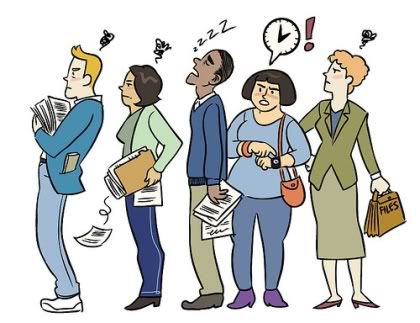
When using a deferred reward, you do so with the promise of some kind of reward in the future. This may include a holiday at the end of the month or the promise of success in the future once you have completed a project for example.
Deferred reward is commonly used by highly successful people, however, it does require you to distinguish between short and long-term gratification. This means that, in general, you seek pleasures that will come in the future at the expense of pleasures which can be obtained immediately.
Deferred reward is an excellent way to build good habits, and it will also help a person to increase their level of self-discipline by giving them a long-term time perspective.
5) Immediate Reward

This type of reward occurs straight after a task is completed. The quicker you receive the reward, the greater effect it has on you.
This method is commonly used in schools on young children, such as by giving a child a gold start for good behavior or for good homework. Given enough time, the child will eventually learn to associate the desired behavior with the reward and so will become motivated to repeat it.
Which reward system should you use?
There is no set reward system that everyone should use, so instead, you should decide upon which reward system is best suited to you.
In general however, intermittent and deferred reward mixed in with a little punishment and reward withdrawal, can be a very effective combination for developing new habits.
Remember, these same principles which you apply on yourself can also be applied on to other people. You could for example, use rewards on a partner whom you are in a relationship with in order to get them to repeat a certain type of behavior.
It is also important to remember, that in order for rewards to be effective at shaping behavior, you must make sure to maintain the value of the rewards you give out. This means not rewarding every behavior, making rewards proportional to a given behavior and not rewarding bad behavior.
This last point is especially important, as if you still give a reward for bad behavior, either to yourself or to someone else, you may encourage that behavior to be repeated again.
If you are also rewarding bad behavior, a person may learn that they will be rewarded regardless of what they do. As a result, they will largely act as they please and you will find it very difficult to influence how they act.
Reviewed – 1st April 2016